What is Abstract Art Definition? Unlocking Its True Meaning
abstract art definition

What is Abstract Art Definition? Unlocking Its True Meaning

Dive into the captivating world of abstract art and discover its core principles, evolution, and enduring legacy.

Explore Abstract Art Now

Key Takeaways

  • ✓ Abstract art does not attempt to represent external reality, but rather uses shapes, colours, forms, and gestural marks to achieve its effect.
  • ✓ Pioneers like Wassily Kandinsky, Kazimir Malevich, and Piet Mondrian were instrumental in its early development.
  • ✓ Its origins can be traced to the early 20th century, emerging from the expressive movements of Post-Impressionism and Cubism.
  • ✓ Abstract art aims to evoke emotions, ideas, or spiritual concepts directly, bypassing literal interpretation.

How It Works

1
Deconstructing Reality

Abstract artists often begin by observing reality, then distill it down to its fundamental elements. They might simplify forms, exaggerate colours, or completely abandon recognisable subjects.

2
Embracing Non-Objectivity

The artwork becomes an object in itself, existing independently of any external reference. The focus shifts to the intrinsic qualities of line, shape, colour, and texture.

3
Communicating Emotion

Through the deliberate arrangement of visual elements, abstract art seeks to convey feelings, moods, or intellectual concepts. The viewer's subjective response is often central to its meaning.

4
Inviting Interpretation

Unlike representational art, abstract works often encourage diverse interpretations. There isn't a single 'correct' way to understand it, making the viewing experience highly personal.

Unpacking the Core: What is Abstract Art Definition?
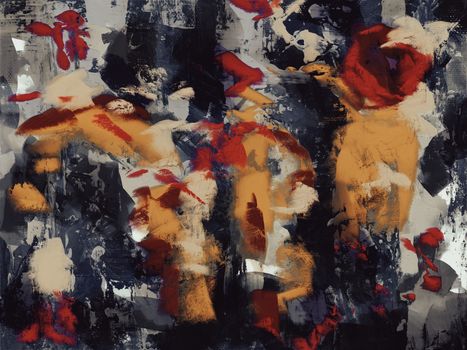
Dynamic abstract expressionist artwork with bold colors and textures. Photo: Steve A Johnson / Pexels
At its heart, the definition of abstract art is rooted in its departure from literal representation. Unlike traditional art forms that strive to depict recognisable objects, people, or landscapes, abstract art intentionally moves away from objective reality. Instead, it uses visual language of shape, form, colour, and line to create a composition which may exist with a degree of independence from visual references in the world. It’s about expressing an idea, an emotion, a spiritual concept, or simply the inherent beauty of visual elements themselves, without the constraint of illustrating a specific subject. This doesn’t mean it's arbitrary or without meaning; quite the opposite. Abstract artists carefully select and arrange elements to evoke a particular response or communicate a specific message, often deeply personal or philosophical. The term 'abstract' itself comes from the Latin 'abstrahere', meaning 'to draw away' or 'to separate'. In an artistic context, this refers to drawing away from the literal appearance of things, simplifying them, or completely transforming them into something new. Early abstract artists were often driven by a desire to create a universal art form, one that could transcend cultural and linguistic barriers by speaking directly to the human spirit through pure visual sensation. They believed that by stripping away the superficial details of the physical world, they could access deeper truths or higher spiritual realms. This quest led to diverse approaches, from the geometric purity of Constructivism to the emotional intensity of Abstract Expressionism. Understanding what is abstract art definition also requires acknowledging its subjective nature. What one viewer perceives as a chaotic jumble of colours, another might see as a profound expression of joy or sorrow. This open-endedness is a fundamental characteristic and a source of both its appeal and its occasional challenge for audiences accustomed to more straightforward imagery. It invites active engagement, encouraging viewers to look beyond the surface and connect with the artwork on an emotional or intellectual level. The evolution of abstract art was not a sudden break but a gradual progression, often influenced by scientific discoveries, philosophical shifts, and social upheavals of the late 19th and early 20th centuries. Artists felt a growing dissatisfaction with academic traditions and sought new ways to reflect the complexities of modern life. They explored theories of colour, perception, and psychology, pushing the boundaries of what art could be. This revolutionary spirit continues to define abstract art, making it a vibrant and ever-evolving field. For more insights into artistic movements, consider exploring the broader context of modern art movements.

The Rich Tapestry of Abstract Art History and Pioneers
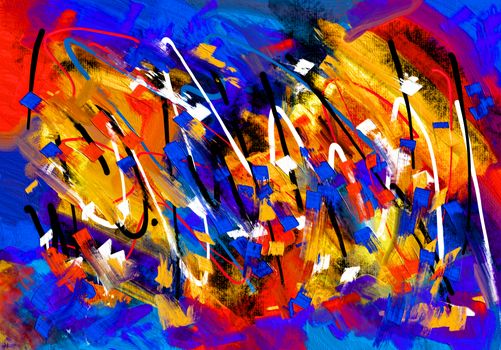
Dynamic abstract acrylic painting with bold colors and energetic patterns. Photo: Steve A Johnson / Pexels
The history of abstract art is a fascinating journey that began in the early 20th century, emerging from the fertile ground of Post-Impressionism, Fauvism, and Cubism. While some argue that elements of abstraction can be found in ancient and non-Western art, the formal movement of abstract art as we know it truly took shape around 1910. One of the most prominent figures in establishing the definition of abstract art was Wassily Kandinsky. Often credited with creating the first purely abstract painting in 1910, Kandinsky believed that art should express inner spiritual truths rather than external realities. He saw parallels between painting and music, aiming to create compositions that evoked emotions directly, much like a symphony. His theoretical writings, particularly 'Concerning the Spiritual in Art' (1911), laid a foundational philosophy for abstract art, arguing for an art free from the imitation of nature. Simultaneously, in Russia, Kazimir Malevich developed Suprematism, an art movement focused on fundamental geometric forms (squares, circles, rectangles) in a limited range of colours. His iconic 'Black Square' (1915) is a radical example of non-objective art, aiming for 'the supremacy of pure artistic feeling.' Malevich sought to free art from the burden of the object, aspiring to a spiritual, non-material reality. Across Europe, Piet Mondrian, a Dutch painter, developed Neo-plasticism, characterised by a strict geometric style using only primary colours (red, blue, yellow), black, and white, arranged on a grid of vertical and horizontal lines. Mondrian believed this pure, ordered art reflected a universal harmony and spiritual order. His work, like 'Composition with Red, Blue, and Yellow' (1930), is instantly recognisable and profoundly influential. The Bauhaus school in Germany, founded by Walter Gropius, also played a crucial role, integrating abstract art principles into design, architecture, and craft. Artists like Paul Klee and Josef Albers taught there, exploring colour theory and the expressive potential of abstract forms. In the United States, the mid-20th century saw the rise of Abstract Expressionism, a movement that shifted the focus of the art world to New York. Artists like Jackson Pollock, Mark Rothko, and Willem de Kooning embraced spontaneity, gestural brushwork, and large-scale canvases to convey intense emotions and existential themes. Pollock's 'drip paintings' are a prime example of action painting, where the process of creation itself becomes part of the artwork's meaning. Rothko's large colour field paintings, with their luminous, hovering rectangles of colour, aimed to evoke profound spiritual or contemplative experiences. Each of these pioneers, while distinct in their approach, contributed significantly to broadening what is abstract art definition, demonstrating its immense versatility and capacity for profound expression. Their innovations paved the way for countless subsequent movements and continue to inspire artists today.

Diverse Forms and Enduring Impact of Abstract Expressionism
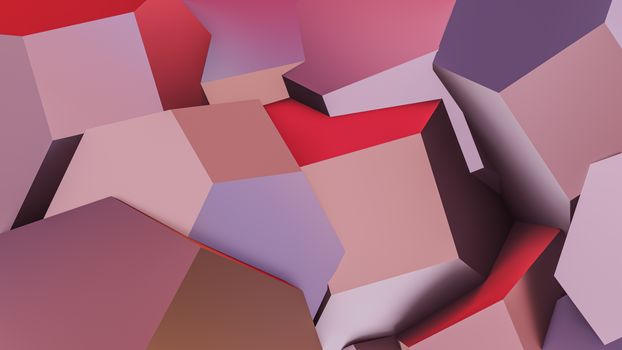
Colorful 3D abstract geometric shapes create a vibrant and artistic design. Photo: Steve A Johnson / Pexels
The definition of abstract art is not monolithic; it encompasses a vast array of styles, techniques, and philosophies, each contributing to its rich and complex tapestry. Beyond the early pioneers, numerous movements and artists have explored abstraction in unique ways. Lyrical Abstraction, for instance, often features fluid, spontaneous brushstrokes and a softer, more poetic approach to colour and form, evoking a sense of movement and musicality. Tachisme, a European equivalent of Abstract Expressionism, emphasised irregular patches of colour and spontaneous gestures, often without a discernible structure. Hard-edge painting, conversely, is characterised by sharp, precise boundaries between areas of solid colour, often creating a sense of flatness and optical illusion. Artists like Ellsworth Kelly and Frank Stella are key figures in this style, focusing on the interplay of shapes and colours with extreme clarity. Op Art (Optical Art) takes this a step further, using geometric patterns and precise colour arrangements to create illusions of movement, vibration, or hidden images, challenging the viewer's perception. Victor Vasarely is often considered the 'father' of Op Art. Post-Painterly Abstraction, emerging in the 1960s, sought to move away from the intense emotionalism of Abstract Expressionism, favouring a more impersonal, cool, and intellectual approach to abstraction. This included Colour Field painting, where large areas of flat, solid colour are applied to the canvas, aiming for a meditative or sublime effect. Helen Frankenthaler's 'soak-stain' technique, where diluted paint was poured onto unprimed canvas, allowed colour to bleed and merge, creating ethereal effects. The impact of abstract art is profound and far-reaching, extending beyond the canvas into various aspects of modern life. It fundamentally changed how we perceive art, challenging the notion that art must imitate nature. It opened up new avenues for artistic expression, allowing artists to explore inner worlds, spiritual concepts, and the pure aesthetics of visual elements. Its influence is evident in architecture, design, fashion, and even digital media. Modern architectural aesthetics, with their emphasis on clean lines, geometric forms, and functionalism, owe much to the principles championed by abstract artists like Mondrian and the Bauhaus school. Graphic design and advertising frequently employ abstract elements to convey concepts and emotions without literal imagery. The enduring relevance of abstract art lies in its ability to transcend specific narratives and speak to universal human experiences. It encourages viewers to engage with art on a deeper, more intuitive level, fostering introspection and emotional response. Understanding what is abstract art definition allows us to appreciate its role not just as an artistic style but as a pivotal cultural phenomenon that continues to shape our visual world. The exploration of its diverse forms demonstrates its adaptability and timeless appeal, proving that art can communicate powerfully without ever needing to represent the literal world. Further reading on the history of art can provide even more context.

Navigating Abstract Art: Tips for Appreciation and Common Misconceptions
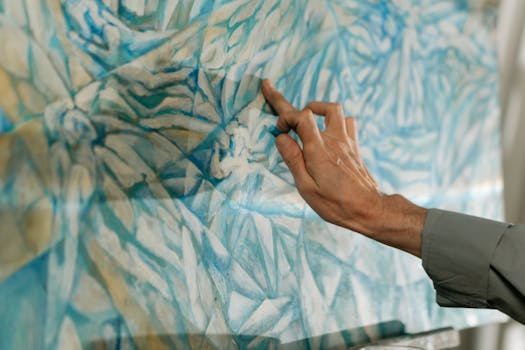
Close-up of a hand applying pastel to a canvas with blue abstract patterns, showcasing creativity. Photo: cottonbro studio / Pexels
For many, approaching abstract art can feel daunting. Without a clear subject matter, viewers might wonder, 'What am I supposed to be seeing?' or 'Is this just random?'. However, appreciating abstract art doesn't require a special degree; it simply asks for an open mind and a willingness to engage differently. Here are some tips for navigating and appreciating abstract art, along with common misconceptions to avoid: **Tips for Appreciation:** 1. **Let Go of Expectations:** Don't search for a recognisable object or scene. Instead, allow your eyes to wander and absorb the colours, shapes, lines, and textures purely for their visual impact. 2. **Focus on Emotion and Sensation:** Consider how the artwork makes you feel. Does it evoke joy, tension, calm, excitement? What sensations do the colours, movements, or compositions suggest? 3. **Consider the Elements:** Pay attention to the fundamental building blocks: the vibrancy or subtlety of colours, the sharpness or fluidity of lines, the balance or imbalance of shapes, and the texture of the surface. How do these elements interact? 4. **Read the Title (Sometimes):** While not always literal, titles can sometimes offer a hint at the artist's intention, an emotion they were exploring, or a concept they were referencing. Use it as a guide, not a definitive answer. 5. **Research the Artist and Context:** Knowing about the artist's life, their philosophical beliefs, and the historical period in which they worked can provide valuable insights into their abstract expressions. 6. **Engage with the Process:** For some abstract works, especially those from Abstract Expressionism, understanding the artist's process (e.g., Jackson Pollock's dripping) is key to appreciating the energy and intent behind the piece. **Common Misconceptions to Avoid:** * **"My child could do that."** While some abstract art might appear simple, it's often the result of deep artistic training, intentional choices, and a profound understanding of composition, colour theory, and art history. The apparent simplicity often masks complex artistic decisions. * **"It means nothing."** Abstract art is rarely meaningless. Its meaning might be emotional, spiritual, philosophical, or purely aesthetic, but it is almost always intentional. The 'meaning' might also reside in the viewer's personal response. * **"It's just random."** Abstract artists make deliberate choices about every line, colour, and shape. There's often a meticulous balance, rhythm, and structure, even in seemingly chaotic works. The 'randomness' is often a carefully orchestrated visual language. * **"It's just for snobs."** Abstract art is for everyone. It doesn't require a formal education to appreciate. It simply asks for an open mind and a willingness to experience art on a different level. Its accessibility lies in its ability to bypass literal interpretation and speak directly to universal human emotions. By shedding these misconceptions and adopting a more open approach, anyone can begin to unlock the profound beauty and expressive power that lies within abstract art, truly understanding what is abstract art definition in its broadest sense.

Comparison

AspectAbstract ArtRepresentational ArtImpressionismSurrealism
Subject MatterNon-objective forms, emotions, ideasRecognisable objects, people, landscapesVisible, fleeting moments of light/colourDream-like, subconscious imagery
FocusVisual elements, inner experienceExternal reality, narrativeSensory perception, atmospherePsychological exploration, irrationality
InterpretationHighly subjective, personalRelatively objective, literalOpen to sensory interpretationSymbolic, often enigmatic
TechniqueVaried (geometric, gestural, colour field)Figurative, often detailedLoose brushstrokes, vibrant coloursJuxtaposition, automatic drawing

What Readers Say

"Before reading this, I found abstract art intimidating. This article beautifully explains what is abstract art definition, making it accessible and truly enjoyable. My perspective has completely shifted!"

Lerato Mokoena · Cape Town, ZA

"The historical context and the breakdown of different movements were incredibly helpful. I now understand the 'why' behind the art, not just the 'what'. Highly recommend for anyone curious about abstract forms."

Sipho Dlamini · Johannesburg, ZA

"I used to dismiss abstract art, but the tips for appreciation in this article made me revisit my local gallery. I actually *felt* something looking at a Rothko for the first time. A truly transformative read!"

Nandi Khumalo · Durban, ZA

"While very thorough, I initially hoped for more direct examples of how to distinguish between abstract and non-objective art. However, the depth of explanation on what is abstract art definition was excellent overall."

Thabo Nkosi · Pretoria, ZA

"As an aspiring artist, this article provided invaluable insight into the philosophy and techniques of abstract art. It's inspired me to experiment more with non-representational forms in my own work."

Zanele Vilakazi · Bloemfontein, ZA

Frequently Asked Questions

What is the main difference between abstract and representational art?

The main difference lies in their relationship to reality. Representational art aims to depict subjects in a recognisable way, mirroring external reality. Abstract art, conversely, deliberately deviates from realistic representation, focusing on intrinsic visual elements like form, colour, and line to convey emotions or ideas independently of objective reality.

Is abstract art just random splatters of paint?

No, abstract art is almost never just random. While some styles, like Abstract Expressionism, embrace spontaneity, the artist makes deliberate choices regarding colour, composition, and gesture. These choices are often rooted in deep artistic understanding and intention, aiming to evoke specific feelings or concepts.

How can I start to understand and appreciate abstract art?

Start by letting go of the need to identify a specific subject. Instead, focus on how the colours, shapes, lines, and textures make you feel. Research the artist's intentions or the art movement it belongs to. Allow yourself to have a personal, emotional response without seeking a literal interpretation.

Does abstract art have any real value or meaning?

Absolutely. Abstract art holds immense cultural, historical, and aesthetic value. It pushed the boundaries of artistic expression, challenged traditional norms, and opened new avenues for conveying emotion, spirituality, and philosophical ideas. Its meaning often lies in its ability to communicate universally through pure visual language.

How does abstract art compare to modern art?

Abstract art is a significant component of modern art, but not all modern art is abstract. Modern art encompasses a broad period from the late 19th to the mid-20th century, including movements like Impressionism, Cubism, and Surrealism. Abstract art specifically refers to art that does not attempt to represent external reality, making it a distinct category within the larger modern art umbrella.

Who was the first abstract artist?

While there's ongoing debate, Wassily Kandinsky is widely credited with creating one of the first purely abstract paintings around 1910. His theoretical writings also provided a foundational philosophy for the movement, advocating for art that expressed inner spiritual truths.

Is there a 'right' way to look at abstract art?

There isn't a single 'right' way. Abstract art often encourages personal interpretation and emotional engagement. The 'right' way is the one that allows you to connect with the artwork, whether through its aesthetic qualities, the emotions it evokes, or the intellectual questions it poses. Your subjective experience is part of its meaning.

What is the future trend for abstract art?

Abstract art continues to evolve, often integrating new technologies and mediums. We see digital abstract art, interactive installations, and abstract expressions in virtual reality. Artists are also exploring new materialities and pushing conceptual boundaries, ensuring its continued relevance and dynamic presence in the contemporary art world.

Now that you have a comprehensive understanding of what is abstract art definition, its history, and its profound impact, we invite you to explore abstract art with new eyes. Visit a gallery, delve into artist biographies, and allow yourself to be moved by the limitless possibilities of non-representational expression.

Topics: abstract art definitionabstract art meaningnon-representational arthistory of abstract artmodern art movements
Leo List
Brampton weed
Adultwork EstrelaBet Vai de Bet R7 Bet Betão Galera Bet Rainbet Bet9ja Shop SportyBet BetKing Sisal Loto Foot Hollywoodbets YesPlay Odibets RushBet Jugabet BetWarrior BetCity MSport betPawa Fortebet