Unveiling South African Art History: A Rich Tapestry
South African art history

Unveiling South African Art History: A Rich Tapestry

Dive deep into the diverse epochs, movements, and artists that have shaped South Africa's artistic legacy, revealing its soul.

Discover the Legacy

Key Takeaways

  • ✓ South African art history spans millennia, beginning with San rock art.
  • ✓ Colonialism deeply impacted artistic development, introducing new forms and themes.
  • ✓ Apartheid era art became a powerful tool for resistance and social commentary.
  • ✓ Post-apartheid art reflects a complex nation grappling with identity and reconciliation.

How It Works

1
Journey Through Time

We'll start our exploration at the dawn of human creativity in Southern Africa, examining the earliest artistic expressions and their cultural significance. This foundational period sets the stage for understanding subsequent developments.

2
Unpack Colonial Influences

Next, we'll delve into the period of European arrival and its profound impact on indigenous art forms and the emergence of new artistic traditions. This era introduced new materials, techniques, and philosophical underpinnings that forever altered the artistic landscape.

3
Witness Resistance and Resilience

Our journey continues through the tumultuous apartheid years, showcasing how art became an indispensable voice for protest, identity, and hope. Artists bravely challenged oppressive regimes, creating works that resonated globally.

4
Embrace Contemporary Narratives

Finally, we'll examine the dynamic and evolving landscape of post-apartheid art, where artists grapple with reconciliation, memory, and forging a new national identity. This modern period highlights the ongoing dialogue within South African society.

The Ancient Roots of South African Art
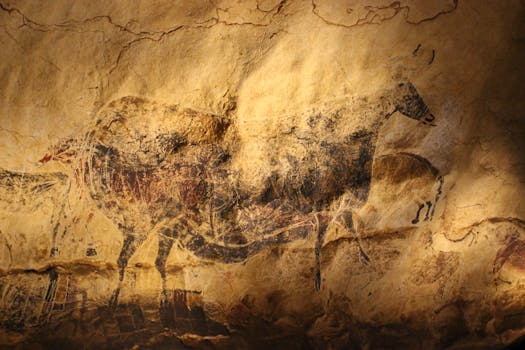
Explore the historic Lascaux cave painting, a UNESCO World Heritage site. Photo: toshihiko tanaka / Pexels
The story of South African art history begins not in galleries or studios, but on the ancient rock faces and within the sacred caves scattered across the vast landscapes of Southern Africa. For millennia, the San people, indigenous hunter-gatherers, meticulously documented their lives, beliefs, and spiritual journeys through intricate rock art. These paintings and engravings, found in sites like the Drakensberg Mountains, are not mere decorative images; they are profound narratives, spiritual records, and sophisticated expressions of a complex worldview. They depict trance dances, animalistic transformations, hunting scenes, and mythical creatures, offering an unparalleled window into the San’s cosmology and daily existence. The pigments, often derived from natural ochres, minerals, and animal fats, have withstood the test of time, preserving stories that predate written history by thousands of years. Understanding these early forms is crucial to appreciating the foundational layers of artistic expression on the continent. The San artists were not simply rendering what they saw; they were interpreting the spiritual dimensions of their reality, often depicting shamans in altered states of consciousness, communicating with the spirit world. This spiritual dimension imbued their art with immense power and meaning, making it a sacred practice rather than just an aesthetic pursuit. The techniques employed, from fine-line engravings to polychrome paintings, demonstrate a remarkable artistic skill and a deep understanding of their environment. These ancient masterpieces represent the genesis of artistic thought in the region, laying a spiritual and cultural groundwork that, while often overlooked in Western art historical narratives, is undeniably the origin point of South African art. Their legacy continues to inspire contemporary artists who seek to connect with indigenous forms of knowledge and expression. The meticulous detail and symbolic depth within San rock art speak volumes about their intricate social structures and their profound connection to the land and its spiritual forces. These sites are not just archaeological wonders; they are living museums of human creativity and belief, testifying to the enduring power of art to communicate across vast expanses of time. The sheer volume and geographical spread of these sites across South Africa underscore the widespread artistic activity of the San, making their contribution an indelible part of the nation's artistic heritage. Their art is a testament to the fact that sophisticated artistic traditions thrived in Southern Africa long before any external influences arrived, forming the very bedrock of what would become South African art history. It's a reminder that art is an intrinsic human impulse, a fundamental way to make sense of the world and our place within it, a truth beautifully illustrated by the ancient hands that painted these timeless stories onto stone.

Colonial Encounters and the Hybridization of Art
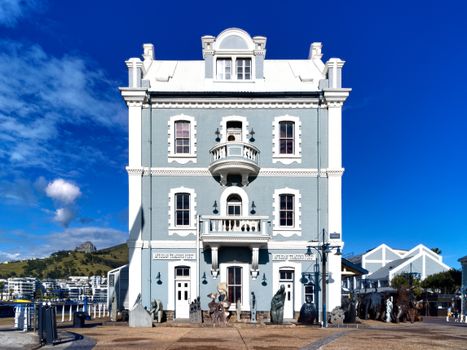
Victorian-style building at Cape Town's historic V&A Waterfront in South Africa. Photo: Jean van der Meulen / Pexels
The arrival of European settlers from the 17th century onwards marked a dramatic turning point in South African art history. This period introduced new artistic mediums, techniques, and, crucially, a Western aesthetic and patronage system that profoundly impacted indigenous artistic practices. While traditional forms like beadwork, pottery, and sculpture continued within African communities, often adapting to new materials and influences, European art traditions began to establish themselves. Early colonial art was often documentary, focusing on landscapes, flora, fauna, and ethnographic depictions of indigenous peoples, frequently through a European lens that often exoticized or romanticized the 'other.' Artists like Thomas Baines and George French Angas produced valuable historical records, yet their perspectives were inherently shaped by the colonial gaze. This era saw the emergence of formal art education, primarily for white artists, leading to the development of European-style painting, sculpture, and architecture. As the 19th and early 20th centuries progressed, South African artists, often trained abroad or by European expatriates, began to engage with international art movements, from Impressionism to Cubism, adapting them to local contexts. However, the themes often remained rooted in colonial narratives, reflecting the dominant power structures of the time. The establishment of art schools and galleries, though initially exclusive, slowly began to foster a local art scene. Indigenous artists, though largely excluded from these formal institutions, continued their practices, sometimes incorporating new materials or techniques learned through informal contact or mission schools. This period of contact and often conflict led to a complex hybridization of art forms, where European influences met and sometimes clashed with traditional African aesthetics. For instance, some traditional craft forms began to incorporate European imagery or materials, creating unique hybrid expressions. This era laid the groundwork for the later struggles over representation and identity that would define much of 20th-century South African art. The introduction of Western art forms also brought with it the concept of art as a commodity and a medium for individual expression, a departure from the communal and functional aspects often inherent in traditional African art. This shift in understanding art's purpose further complicated the artistic landscape. The initial colonial phase was characterized by a one-way flow of influence, where European artistic norms were imposed or adopted, often sidelining or devaluing indigenous artistic heritage. However, as the century progressed, a more nuanced interaction began to emerge, slowly paving the way for a distinctly South African modernism that would grapple with these complex legacies. The colonial encounter was not just an artistic exchange; it was a cultural collision that irrevocably altered the trajectory of all forms of artistic expression in the region, creating a rich but often contested artistic heritage that continues to be re-evaluated today.

For more options, check out escort profile verification in Canada, verified listings on Escorts.vc, Canadian profile verification guide, Escorts.vc.

Art as Resistance: The Apartheid Era
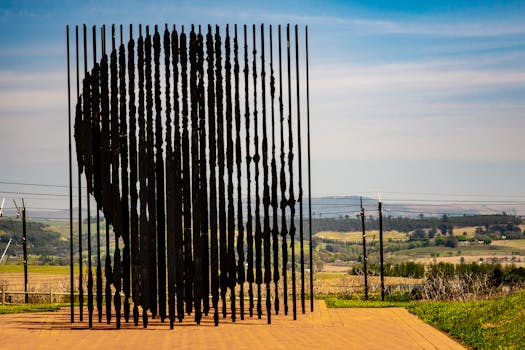
Nelson Mandela sculpture at his capture site, a landmark tourist attraction in South Africa. Photo: Magda Ehlers / Pexels
The mid-20th century, dominated by the brutal system of apartheid, transformed South African art into a powerful weapon of resistance, documentation, and protest. This period saw artists, both black and white, using their creativity to challenge racial segregation, injustice, and oppression, often at great personal risk. Black artists, frequently operating outside the formal gallery system due to discrimination, developed powerful visual languages to articulate their experiences of dispossession, forced removals, and daily indignities. Artists like Gerard Sekoto, Ernest Mancoba, and George Pemba, though often working in isolation or exile, laid crucial foundations for a socially conscious art. The Polly Street Art Centre in Johannesburg, and later Rorke's Drift in KwaZulu-Natal, became vital hubs for black artists, providing training and a space for creative expression and political awakening. Here, artists like Dumile Feni, John Muafangejo, and Azaria Mbatha developed distinctive styles, often infused with indigenous narratives and Christian symbolism, to comment on the human cost of apartheid. White artists, too, played a significant role, with figures like Irma Stern and Maggie Laubser initially exploring identity within a colonial context, and later artists like Walter Battiss and Alexis Preller engaging with broader African aesthetics. However, it was artists like Norman Catherine, William Kentridge, and Jane Alexander who more directly confronted the horrors of apartheid, using satire, allegory, and stark realism to expose the regime's brutality and its psychological impact. Their works often bypassed censorship through symbolic representation, allowing them to communicate powerful messages to a discerning audience. The international anti-apartheid movement also provided platforms for South African artists in exile, ensuring their voices reached a global audience and garnering international solidarity. Art became a means of preserving dignity, asserting identity, and articulating a vision for a just future. The imagery of resistance – the clenched fist, the broken chain, the enduring spirit – became iconic. This era highlights art's capacity to act as a crucial form of historical record and social commentary, capturing the lived realities of a nation in turmoil. The works created during apartheid are not just aesthetically significant; they are vital historical documents, imbued with the pain, resilience, and unwavering hope of a people fighting for freedom. The art from this period serves as a poignant reminder of the power of creativity in the face of tyranny, offering profound insights into the human spirit's capacity for resistance and hope. It is a period that continues to influence contemporary artists, who often revisit these traumatic memories to understand the present and shape the future of a democratic South Africa.

Forging a New Identity: Post-Apartheid Contemporary Art
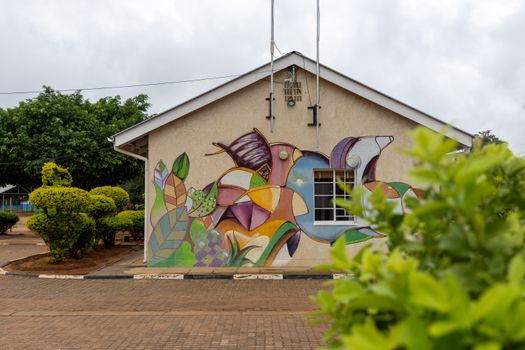
A vibrant mural decorates the side of a building in Mochudi, Botswana, outdoors. Photo: Toro Tseleng / Pexels
With the dismantling of apartheid in 1994, South African art entered a dynamic and complex new phase, grappling with themes of reconciliation, memory, identity, and the challenges of nation-building. The transition to democracy unleashed an explosion of creative energy, as artists were finally free to express themselves without the immediate threat of censorship or political repression. This period has seen a vibrant flourishing of contemporary South African art, characterized by its diversity, experimental nature, and engagement with global art discourse, while remaining deeply rooted in local experiences. Artists are no longer solely defined by their opposition to apartheid; instead, they explore a multifaceted range of issues, from the legacies of colonialism and racial injustice to gender identity, sexuality, urbanization, and environmental concerns. The work of artists like William Kentridge, whose animated drawings and films explore memory, history, and the process of reconciliation, gained international acclaim, putting South African art firmly on the global stage. Photographers like Santu Mofokeng and David Goldblatt continued to document the social landscape, offering nuanced perspectives on post-apartheid realities. A new generation of artists emerged, fearlessly addressing sensitive topics. Zanele Muholi's powerful photographic portraits champion LGBTQ+ visibility and rights, while Mary Sibande creates elaborate sculptural installations that critique historical narratives and challenge stereotypes. Performance art, video art, and installation art have gained prominence, alongside traditional painting and sculpture, reflecting a globalized art world and a desire to experiment with new forms of expression. The art market has also expanded significantly, with South African artists achieving recognition and commercial success both locally and internationally. Galleries, museums, and art fairs have proliferated, creating a more robust infrastructure for the arts. However, the post-apartheid art scene is not without its complexities. Debates around representation, redress, and the decolonization of art institutions continue to shape its trajectory. Artists often confront the ongoing challenges of inequality, corruption, and social fragmentation, using their work as a platform for critical dialogue and social commentary. This period marks a profound shift from art as resistance to art as a means of constructing a new national narrative and engaging with global conversations, while simultaneously reflecting on the past and imagining the future. The diversity of voices and perspectives in contemporary South African art is its greatest strength, offering a rich tapestry of experiences that continues to evolve and challenge preconceived notions, making it an exciting and crucial area of global art. The freedom gained has allowed for an introspection and a collective processing of trauma and hope, manifest in every brushstroke, sculpture, and digital creation.

Comparison

Artistic PeriodDominant ThemesKey MediumsCultural Impact
Ancient San ArtSpirituality, hunting, cosmologyRock paintings, engravingsFoundation of indigenous knowledge
Colonial EraLandscape, ethnographic studies, Western portraitureOil painting, sculpture, printsIntroduction of Western aesthetics, hybrid forms
Apartheid EraResistance, identity, social commentaryPainting, drawing, printmaking, sculptureCrucial for anti-apartheid movement, global awareness
Post-ApartheidReconciliation, memory, identity, social justiceMulti-media, photography, installation, performanceGlobal recognition, diverse narratives, decolonization discourse

What Readers Say

"This article offers an incredibly insightful and comprehensive overview of South African art history. It beautifully connects the dots from ancient San art to contemporary movements, highlighting the resilience and innovation of our artists across epochs. A truly essential read for anyone interested in the soul of our nation."

Dr. Naledi M. Khumalo · Johannesburg, ZA

"As an art enthusiast, I've always been fascinated by African art. This piece on South African art history is exceptionally well-researched, providing a depth of understanding I haven't found elsewhere. It makes me want to visit every gallery in Cape Town!"

Ethan Davies · London, UK

"Finally, a resource that truly honors the complexity and richness of our artistic heritage. The breakdown of each era helped me understand how art has always been intertwined with our struggles and triumphs. My appreciation for local artists has grown tenfold after reading this."

Sipho Dlamini · Durban, ZA

"A very informative article, though I would have loved to see more specific examples of early colonial artists mentioned. Nevertheless, it provides an excellent framework for understanding the evolution of South African art and its profound socio-political context."

Maria Rodriguez · New York, USA

"From an academic perspective, this article is a valuable contribution to accessible art historical discourse. It manages to condense vast periods of South African art history into engaging narratives without losing scholarly rigor. Highly recommended for students and general readers alike."

Professor J. Van der Merwe · Pretoria, ZA

Frequently Asked Questions

What is the earliest form of South African art?

The earliest and most significant form of South African art is San rock art, dating back tens of thousands of years. These ancient paintings and engravings, found in numerous sites across the country, depict spiritual beliefs, daily life, and hunting practices of the San people, offering invaluable insights into their culture and cosmology.

How did apartheid affect South African artists?

Apartheid profoundly affected South African artists by imposing strict censorship, limiting access to education and resources for non-white artists, and creating an environment of oppression. Despite these challenges, art became a powerful tool for resistance, social commentary, and documenting the human cost of the regime, with many artists working in exile or through underground networks.

Where can I see South African art?

You can experience South African art in various institutions, including the Zeitz MOCAA and Iziko South African National Gallery in Cape Town, the Johannesburg Art Gallery, and numerous private galleries across major cities. Many of these institutions house collections spanning from historical to contemporary works, offering a comprehensive view.

Is contemporary South African art globally recognized?

Yes, contemporary South African art has gained significant global recognition. Artists like William Kentridge, Zanele Muholi, and Mary Sibande have exhibited in prestigious international galleries and museums, contributing to a vibrant global dialogue. The unique perspective and compelling narratives often found in South African art resonate with audiences worldwide.

How does traditional African art differ from Western art in South Africa?

Traditional African art in South Africa often prioritizes communal function, spiritual significance, and narrative over individual authorship or purely aesthetic contemplation, which are often central to Western art. While Western art introduced concepts of art as a commodity and individual expression, traditional forms like beadwork, pottery, and sculpture were deeply integrated into social and ceremonial life.

Who should learn about South African art history?

Anyone interested in culture, history, social justice, or the transformative power of art should delve into South African art history. It offers profound insights into human resilience, the complexities of identity, and the enduring ability of creativity to shape and reflect a nation's soul. It's essential for students, art enthusiasts, and anyone seeking a deeper understanding of global artistic narratives.

What are the biggest challenges facing South African artists today?

Contemporary South African artists still face challenges, including issues of funding, access to international markets, and the ongoing process of decolonizing art institutions. Debates around representation, historical narratives, and equitable opportunities continue, even as artists push boundaries and explore new forms of expression in a democratic society.

What future trends are emerging in South African art?

Emerging trends in South African art include a continued focus on identity politics, decolonial narratives, environmental concerns, and the exploration of digital and new media art. There's also a growing emphasis on reclaiming indigenous art forms and integrating them into contemporary practices, fostering a unique blend of local and global aesthetics.

Embark on your own journey through the incredible narrative of South African art history. Explore galleries, read more, and let the powerful stories told through art deepen your understanding of this remarkable nation's past, present, and future. Discover the enduring legacy of creativity and resilience.

Topics: South African art historyAfrican artcontemporary South African artsan rock artpost-apartheid art
Leo List
Brampton weed
Adultwork