Unveiling Famous South African Artists: A Creative Journey
famous south african artists

Unveiling Famous South African Artists: A Creative Journey

Explore the profound impact and diverse expressions of South Africa's most celebrated artistic talents across generations.

Discover Their Legacy

Key Takeaways

  • ✓ South African art reflects a rich tapestry of cultural influences and historical narratives.
  • ✓ Many famous South African artists used their work as a powerful tool for social commentary and resistance.
  • ✓ The country boasts a diverse range of artistic styles, from traditional to contemporary and abstract.
  • ✓ International recognition for South African artists has grown significantly in recent decades.

How It Works

1
Explore Historical Pioneers

Delve into the foundational artists who shaped early South African art, understanding their influences and societal contexts. Learn about their contributions to establishing a unique national artistic identity.

2
Uncover Resistance & Identity

Discover artists whose work powerfully critiqued apartheid and explored themes of identity, struggle, and resilience. Understand how art became a voice for the voiceless during tumultuous times.

3
Celebrate Contemporary Masters

Journey through the vibrant world of modern and contemporary South African art, featuring artists pushing boundaries. Witness the evolution of South African artistic expression into the 21st century.

4
Experience Diverse Mediums

Appreciate the breadth of artistic expression, from painting and sculpture to photography and performance art. Understand how different mediums convey unique messages and perspectives.

The Pillars of South African Art: Early Pioneers and Their Enduring Legacy
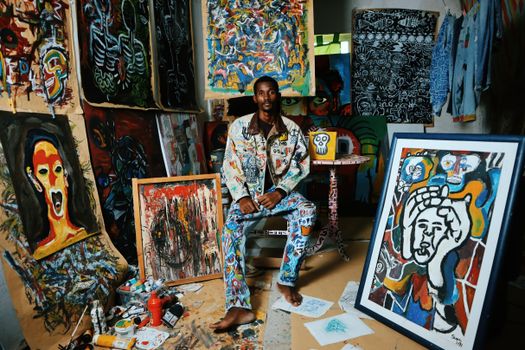
An artist in a creative studio surrounded by colorful paintings in New York City. Photo: Sandro Lopes Art / Pexels
South Africa's artistic landscape is as diverse and complex as its history, deeply rooted in the stories of its people, its struggles, and its triumphs. To truly appreciate the famous South African artists of today, one must first look back at the pioneers who laid the groundwork, shaping the nascent identity of a nation through their brushstrokes, sculptures, and visions. These early masters navigated a challenging socio-political climate, often using their art as a subtle, or sometimes overt, form of expression and commentary. Their contributions are not just historical footnotes; they are the very bedrock upon which contemporary South African art stands, offering insights into the evolution of artistic thought and technique within the region. One cannot discuss early South African art without mentioning Gerard Sekoto (1913-1993). A true trailblazer, Sekoto is widely regarded as one of the first black South African artists to gain international recognition. His poignant depictions of township life during the apartheid era, particularly in Sophiatown and District Six, are masterpieces of social realism. Sekoto’s work, characterized by its vibrant colours and profound humanity, captured the everyday joys and hardships of black urban communities, providing an invaluable visual record of a society undergoing immense change. He spent much of his career in exile in Paris, yet his heart remained in South Africa, a sentiment vividly conveyed through his nostalgic and often melancholic compositions. His ability to convey complex emotions with simple forms and expressive brushwork made his art universally resonant, transcending geographical and cultural boundaries. Another foundational figure is Irma Stern (1894-1966), an artist whose bold, expressionistic style set her apart. Stern’s extensive travels across Africa, including Central Africa and Zanzibar, profoundly influenced her work. Her portraits of indigenous peoples, often rendered with intense colours and powerful brushstrokes, challenged conventional European perspectives and celebrated the beauty and dignity of her subjects. While her work has faced scrutiny for its colonial gaze in later years, her impact on the South African art scene, particularly in bringing attention to African cultures, is undeniable. She was a prolific painter and a significant figure in establishing a unique South African modernism, distinct from its European counterparts. Her Cape Town home is now a museum, preserving her legacy and providing a space for art enthusiasts to engage with her extraordinary body of work. These artists, along with others like Maggie Laubser and Alexis Preller, were instrumental in forging a distinct South African artistic identity. They navigated the complexities of their time, using art as a vehicle for personal expression, social documentation, and cultural celebration. Their legacy continues to inspire generations of artists, reminding us of the power of art to reflect, challenge, and shape society. Understanding their journeys is crucial to comprehending the rich tapestry that defines South African art today.

Art as Activism: Voices of Resistance and Resilience During Apartheid
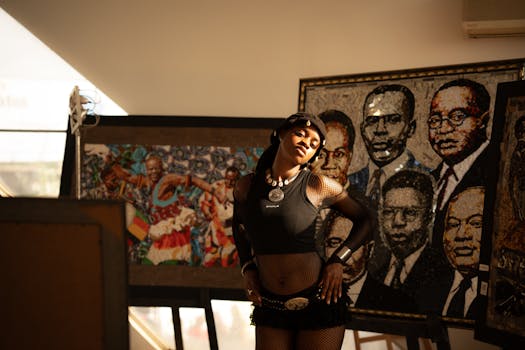
A woman poses stylishly in an art gallery, surrounded by vibrant paintings. Photo: Victoria Kibaki / Pexels
The apartheid era (1948-1994) was a period of profound injustice and systemic oppression in South Africa, and it profoundly shaped the artistic output of the time. For many famous South African artists, art became a crucial weapon in the struggle against apartheid, a means to document the brutal realities, articulate dissent, and preserve the humanity of those systematically dehumanized. These artists often worked under immense pressure, facing censorship, harassment, and even imprisonment, yet their courage and conviction fueled a powerful artistic movement that resonated globally, bringing international attention to the plight of South Africans. Their work is not merely art; it is historical testimony, a cry for justice, and a testament to the indomitable spirit of resistance. Dumile Feni (1942-1991), often referred to as the 'Goya of the townships,' is a prime example of an artist whose work was steeped in the socio-political turmoil of his time. His powerful, often disturbing, drawings and sculptures depicted the suffering, anger, and dehumanization experienced by black South Africans under apartheid. Feni’s figures are typically elongated, contorted, and raw, conveying a visceral sense of anguish and despair. Exiled in the late 1960s, his art continued to serve as a potent commentary on the injustice from afar, making him a significant voice of the resistance movement. His ability to transform personal pain into universal metaphors of oppression made his work incredibly impactful and enduring. Another pivotal figure was Helen Sebidi (born 1943), whose vibrant and complex paintings explore themes of ancestral heritage, rural life, and the impact of apartheid on traditional communities. Sebidi’s work often features powerful female figures and intricate narratives, blending traditional African storytelling with contemporary artistic techniques. Her art celebrates resilience and the enduring spirit of African culture despite systematic attempts to dismantle it. Having grown up in rural communities and later moving to the townships, her art bridges these two worlds, offering a unique perspective on the lived experience of black South Africans during apartheid and its aftermath. William Kentridge (born 1955) stands as one of South Africa's most internationally acclaimed artists, renowned for his animated drawings, films, prints, and theatrical productions. While not always directly confrontational in the same way as Feni, Kentridge’s work deeply interrogates the complexities of South African history, memory, and the aftermath of apartheid. His distinctive charcoal drawings, which are erased and redrawn to create stop-motion animation, metaphorically reflect the constant revision and reinterpretation of history. His art explores themes of power, exploitation, and the human condition with a profound intellectual depth and a unique visual language, making him a critical voice in post-apartheid discourse. These artists, and many others, ensured that the struggle for freedom was not only fought on political grounds but also eloquently articulated through the universal language of art.

Contemporary Visionaries: Shaping the Future of South African Art
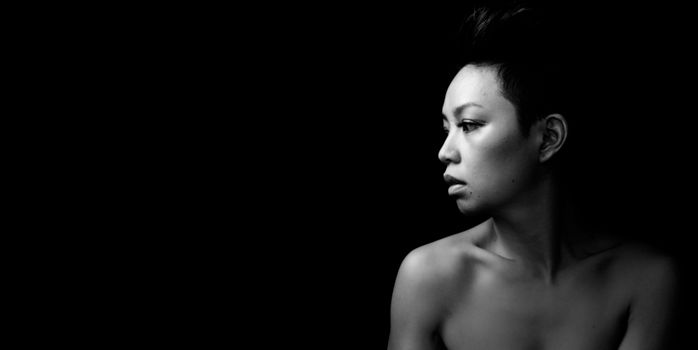
Dramatic black and white portrait capturing a woman's contemplative profile. Photo: Evelyn Chong / Pexels
As South Africa transitioned into a democracy, its art scene blossomed, reflecting the hopes, challenges, and evolving identities of a rainbow nation. The post-apartheid era has given rise to a new generation of famous South African artists who continue to push boundaries, engage with global art dialogues, and explore contemporary issues with fresh perspectives. Their work often grapples with the legacy of the past, the complexities of present-day South Africa, and its place in an interconnected world. This period has seen an explosion of creativity, with artists exploring a wider array of mediums and themes, from identity politics and gender to environmental concerns and the digital age. The vibrancy of this contemporary scene is a testament to the resilience and adaptability of South African creative spirit. Zanele Muholi (born 1972) is a visual activist and photographer whose work is central to documenting and celebrating the lives of black lesbian, gay, bisexual, transgender, queer, and intersex (LGBTQI) individuals in South Africa. Through powerful and intimate portraits, Muholi challenges stereotypes, confronts prejudice, and gives visibility to marginalized communities. Their ongoing project, 'Faces and Phases,' is a monumental series of black and white portraits that serves as a vital archive, asserting the existence and dignity of LGBTQI individuals in a society still grappling with homophobia and transphobia. Muholi’s work is not just art; it is a profound act of activism, sparking dialogue and fostering understanding. Their international recognition highlights the global relevance of their advocacy and artistic vision. Mary Sibande (born 1982) is another compelling contemporary artist known for her striking sculptural installations and photographic works. Sibande uses her own body, or casts of it, to create life-sized figures dressed in elaborate, often exaggerated, domestic worker uniforms, transformed into fantastical, heroic personas. Her alter ego, Sophie, transcends the historical roles imposed on black women in South Africa, challenging perceptions of labor, race, and gender. Through vibrant colours and theatrical staging, Sibande reimagines narratives of power and identity, offering a powerful critique of societal expectations while celebrating the strength and resilience of black women. Her work is a captivating blend of personal narrative and broader social commentary, inviting viewers to question historical representations and envision new possibilities. Kemang Wa Lehulere (born 1984) represents a younger generation pushing the boundaries of conceptual art. Working across various mediums including drawing, photography, video, and performance, Wa Lehulere often explores themes of memory, history, and the politics of knowledge production. His installations frequently incorporate found objects, personal archives, and collaborative elements, creating layered narratives that challenge dominant historical accounts. He often delves into the forgotten or suppressed histories of black South Africans, particularly those related to education and childhood, prompting viewers to reconsider how narratives are constructed and preserved. These artists, alongside others like Athi-Patra Ruga and Nicholas Hlobo, are ensuring that South African art remains at the forefront of global artistic innovation, providing critical insights into the human experience. Their diverse practices demonstrate the boundless creativity and intellectual depth that define contemporary South African art today.

Navigating the Art World: Supporting and Appreciating South African Talent
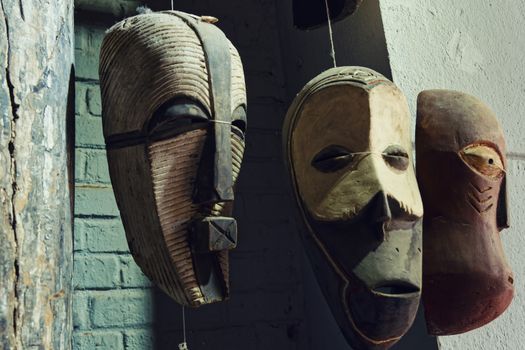
Authentic African masks showcased on a rustic brick wall in a Beijing gallery. Perfect for cultural exhibitions. Photo: Eric Prouzet / Pexels
Engaging with the work of famous South African artists goes beyond mere observation; it's an immersive experience into a rich cultural tapestry. For art lovers, collectors, and those simply curious, understanding how to support and appreciate this vibrant scene is key. The South African art market is dynamic, with a growing international presence, making it an exciting space for discovery. Here are some tips for navigating and appreciating South African art: * **Visit Local Galleries and Museums:** Major cities like Cape Town and Johannesburg boast world-class art institutions such as the Zeitz MOCAA, Iziko South African National Gallery, and the Goodman Gallery. These venues offer comprehensive collections and rotating exhibitions of both historical and contemporary South African art. Smaller, independent galleries are also vital for discovering emerging talent. * **Attend Art Fairs:** Annual events like the FNB Art Joburg and the Investec Cape Town Art Fair are crucial platforms for seeing a wide range of South African and African art under one roof. These fairs provide opportunities to interact with gallerists, artists, and gain insight into market trends. * **Research and Educate Yourself:** Before or after viewing art, take time to learn about the artists, their inspirations, and the socio-political contexts of their work. Books, documentaries, and online resources can deepen your appreciation and understanding. * **Consider Emerging Artists:** While established names are vital, supporting emerging artists helps to cultivate the next generation of talent. Look for graduate shows from art schools and smaller galleries that champion new voices. * **Engage with Art Critically:** Don't be afraid to form your own opinions and engage with the art on a deeper level. Art is meant to provoke thought and emotion. Understand the historical context but also consider its contemporary relevance. **Common Misconceptions to Avoid:** * **Stereotyping African Art:** Avoid the assumption that all South African art fits into a single aesthetic or thematic box. The diversity is immense. * **Ignoring Context:** Separating art from its historical or cultural context can lead to a shallow understanding. The stories behind the art are often as powerful as the art itself. * **Underestimating Global Reach:** South African artists are not just local talents; many have significant international careers and influence global art trends. Their work often speaks to universal human experiences, making them highly relevant on a global stage.

Comparison

AspectPioneering Artists (e.g., Sekoto)Apartheid-Era Artists (e.g., Feni)Contemporary Artists (e.g., Muholi)
Primary FocusDocumenting daily life, establishing SA modernismSocial commentary, resistance, human sufferingIdentity, post-colonialism, gender, global dialogue
Key MediumsOil painting, watercolourDrawing, sculpture, printmakingPhotography, installation, video, mixed media
Societal ContextEarly 20th C. urbanization, pre-apartheidSystemic oppression, censorship, struggleDemocracy, reconciliation, evolving identities
International RecognitionEarly limited recognition, growing posthumouslySignificant during exile, political impactWidespread, critically acclaimed, global presence

What Readers Say

"This article beautifully captures the essence of famous South African artists. I particularly appreciated the depth on Gerard Sekoto; his work truly speaks to the soul of our nation."

Thandi M. · Johannesburg, Gauteng

"As an art student, this piece is an invaluable resource. The insights into Dumile Feni's art and its political context were incredibly enlightening and inspiring for my own practice."

David P. · Cape Town, Western Cape

"I've always been proud of our artists, but this article expanded my knowledge significantly. It made me plan a visit to the Zeitz MOCAA to see some of these incredible works firsthand."

Nomusa Z. · Durban, KwaZulu-Natal

"A very comprehensive overview, though I would have loved to see a bit more on traditional Ndebele or Xhosa artists to round out the picture. Still, an excellent read on famous South African artists."

Liam K. · Pretoria, Gauteng

"The section on contemporary artists like Zanele Muholi was particularly impactful. It's inspiring to see how art continues to drive social change and give voice to important issues in South Africa."

Sarah J. · Port Elizabeth, Eastern Cape

Frequently Asked Questions

Who is considered the most famous South African artist?

While 'most famous' is subjective and changes over time, artists like Gerard Sekoto, Irma Stern, and William Kentridge are consistently recognized internationally for their profound impact and significant contributions to art. Their works are celebrated in major galleries and collections worldwide, reflecting their enduring legacy and influence on artistic discourse.

Is South African art only about apartheid?

No, while apartheid significantly influenced a powerful period of South African art, it is by no means the sole focus. South African art encompasses a vast range of themes including identity, landscape, spirituality, daily life, post-colonialism, gender, and global contemporary issues. Artists explore diverse narratives beyond the apartheid struggle, reflecting the country's rich cultural tapestry.

How can I discover emerging South African artists?

To discover emerging South African artists, attend local art fairs like FNB Art Joburg and Investec Cape Town Art Fair, visit smaller independent galleries, explore university graduate shows, and follow art publications and online platforms that focus on contemporary African art. Engaging with these spaces provides direct access to new talent and fresh perspectives.

Is investing in South African art a good idea?

Investing in South African art can be a valuable endeavor, particularly with the increasing international recognition of its artists. However, like any art investment, it requires research, understanding of the market, and preferably consultation with art advisors. Focus on collecting works that resonate with you from established or promising emerging artists, rather than solely for financial gain.

How does South African art compare to other African art movements?

South African art shares some common threads with other African art movements, such as a strong connection to storytelling, identity, and socio-political commentary. However, it also possesses unique characteristics shaped by its specific colonial history, apartheid era, and diverse cultural groups. It often engages with Western art traditions while maintaining a distinct African voice, making it a unique and influential part of the broader African art narrative.

Who should explore famous South African artists?

Anyone with an interest in art history, cultural studies, social justice, or contemporary global art should explore famous South African artists. Their work offers profound insights into human resilience, the power of artistic expression, and the complex narratives of a nation, appealing to art enthusiasts, historians, and students alike.

Are there ethical considerations when collecting historical South African art?

Yes, ethical considerations are paramount. When collecting historical South African art, particularly pieces from the apartheid era or those depicting indigenous cultures, it's crucial to ensure provenance, consider the artist's original intent, and be mindful of potential issues of cultural appropriation or exploitation. Supporting reputable galleries and understanding the historical context is key to ethical collecting.

What is the future trend for famous South African artists?

The future trend for famous South African artists points towards continued global integration, increased digital engagement, and a deepening exploration of identity, environmental issues, and socio-economic disparities. Expect more interdisciplinary collaborations, innovative use of technology, and a sustained focus on narratives that challenge and inspire, solidifying South Africa's position as a vital hub for contemporary art.

Dive deeper into the extraordinary world of famous South African artists. Explore their masterpieces, understand their impact, and become part of a global community appreciating their profound contributions to art and culture.

Topics: famous south african artistssouth african art historycontemporary south african artsouth african painterssouth african sculptors
Leo List

DK Escorts LU Escorts AT Escorts SE Escorts FI Escorts CH Escorts DE Escorts HR Escorts IE Escorts GR Escorts CZ Escorts NO Escorts BE Escorts FR Escorts SI Escorts IL Escorts NL Escorts PL Escorts HU Escorts ES Escorts IT Escorts PT Escorts SK Escorts RO Escorts ZA Escorts UY Escorts US Escorts UK Escorts NZ Escorts AU Escorts
Brampton weed
Adultwork EstrelaBet Vai de Bet R7 Bet Betão Galera Bet Rainbet Bet9ja Shop SportyBet BetKing Sisal Loto Foot Hollywoodbets YesPlay Odibets RushBet Jugabet BetWarrior BetCity MSport betPawa Fortebet