How to Start Painting in South Africa: Your Creative Journey
how to start painting south africa

How to Start Painting in South Africa: Your Creative Journey

Unleash your inner artist and begin your painting adventure in South Africa with expert advice and local insights.

Begin Your Art Journey

Key Takeaways

  • ✓ South Africa offers a vibrant and diverse art scene for aspiring painters.
  • ✓ Starting with basic, affordable materials is recommended for beginners.
  • ✓ Local art classes and workshops are readily available across major cities.
  • ✓ Exploring South African themes can add unique depth to your artwork.

How It Works

1
Gather Your Essential Supplies

Acquire fundamental painting tools like brushes, paints (acrylic or watercolour are great for beginners), a palette, and suitable surfaces. Prioritise quality over quantity for a better initial experience.

2
Choose Your First Medium

Select a painting medium that aligns with your interest and budget. Acrylics are versatile and fast-drying, while watercolours are accessible and forgiving for initial exploration.

3
Learn Basic Techniques

Familiarise yourself with foundational painting techniques such as colour mixing, brush strokes, and understanding light and shadow. Numerous online tutorials and local workshops can guide you.

4
Practice Consistently & Explore

Dedicate regular time to practice, experiment with different subjects, and don't be afraid to make mistakes. Engage with the local art community for inspiration and feedback.

Unlocking Your Artistic Potential: Why Start Painting in South Africa?
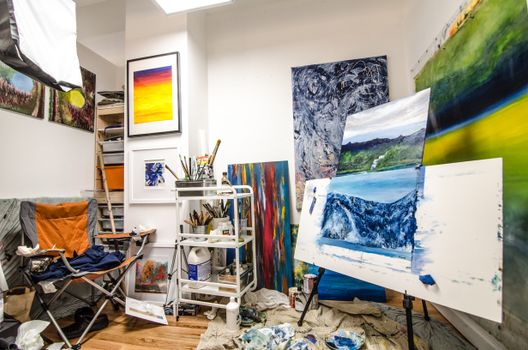
Colorful art studio showcasing vibrant paintings and creative workspace. Photo: Karl Solano / Pexels
South Africa, a nation rich in cultural tapestry and breathtaking landscapes, presents an unparalleled canvas for aspiring artists. The act of painting transcends mere technique; it’s a profound journey of self-discovery, expression, and connection to the world around you. For those asking how to start painting in South Africa, the answer lies in embracing the vibrant energy and diverse inspiration that this country offers. From the dramatic coastlines of the Western Cape to the bustling urban scenes of Johannesburg, and the serene bushveld of Limpopo, every corner of South Africa whispers stories waiting to be translated onto canvas. Painting offers a unique avenue for mindfulness and stress relief. In our fast-paced world, finding an activity that allows you to slow down, focus, and engage your creative faculties can be incredibly therapeutic. The process of mixing colours, applying strokes, and watching an image emerge under your hand is deeply meditative. It provides a much-needed respite from daily pressures, fostering a sense of calm and accomplishment. Moreover, painting in South Africa means engaging with a rich heritage of visual arts. Local galleries, art fairs, and community projects showcase an incredible array of styles, themes, and techniques, reflecting the country's complex history and vibrant present. This exposure can be a powerful source of inspiration, encouraging you to develop your unique artistic voice while drawing from a wellspring of local talent and tradition. Whether you're drawn to abstract expressionism, realistic portraiture, or capturing the majestic wildlife, South Africa provides an endless source of subject matter. The dynamic light, the vivid colours of the Fynbos, the expressive faces of its people, and the compelling narratives embedded in its architecture all serve as muses for the budding painter. Beyond personal enrichment, starting to paint can also open doors to a supportive community. Many South African cities boast active art groups, workshops, and informal gatherings where artists can share their work, exchange ideas, and receive constructive feedback. This sense of camaraderie can be invaluable, especially when you're just beginning your artistic journey. It transforms what could be a solitary pursuit into a shared experience of growth and discovery. Ultimately, deciding how to start painting in South Africa is an invitation to explore, to create, and to connect deeply with yourself and your environment. It's an opportunity to see the world through a new lens, to appreciate beauty in unexpected places, and to contribute your unique perspective to the rich tapestry of South African art. Don't underestimate the power of simply putting brush to canvas; it's the first step on a rewarding path that can enrich your life in countless ways. Consider exploring local art movements by visiting South African art galleries for inspiration. The journey begins with a single stroke, and South Africa is ready to inspire every one of them.

Essential Supplies and Where to Find Them in South Africa
Vibrant close-up of bright yellow yarn balls, ideal for knitting and craft enthusiasts. Photo: Johann Van der Linde / Pexels
Embarking on your painting journey means understanding the tools of the trade. For those asking how to start painting in South Africa, acquiring the right supplies is a crucial first step, but it doesn't have to break the bank. Let's break down the essentials and where you can source them locally. **Paints:** * **Acrylics:** Ideal for beginners due to their versatility, quick drying time, and easy clean-up with water. Brands like Dala, Winsor & Newton Galeria, and Reeves are widely available. * **Watercolours:** Excellent for light, transparent effects, and very forgiving for initial explorations. Dala, Reeves, and Cotman (Winsor & Newton) offer good beginner sets. * **Oils:** While more challenging for beginners due to longer drying times and solvent requirements, oils offer rich colours and blending possibilities. Consider them once you've gained confidence. Dala and Winsor & Newton Winton are popular choices. **Brushes:** Start with a basic set of synthetic brushes in various shapes and sizes (flat, round, filbert). Synthetic brushes work well with both acrylics and watercolours and are easier to clean. Look for sets from Dala, Mont Marte, or local art supply stores. **Surfaces:** * **Canvas:** Stretched canvas or canvas boards are perfect for acrylics and oils. You can find these in various sizes at art stores. * **Paper:** Watercolour paper (at least 200gsm) is essential for watercolours to prevent buckling. Heavy cartridge paper or mixed-media paper can work for acrylics if you're sketching or experimenting. **Other Essentials:** * **Palette:** A simple plastic palette, an old ceramic plate, or even a piece of wax paper can serve as a mixing surface. * **Water Containers:** Old plastic containers or jars for cleaning brushes. * **Paper Towels/Rags:** For wiping brushes and cleaning up spills. * **Easel (Optional):** While not strictly necessary for beginners, a table easel can improve posture and perspective. **Where to Buy in South Africa:** * **Art Supply Stores:** Reputable stores like The Deckle Edge (Cape Town), Herbert Evans (Johannesburg, Pretoria), and The Art Store (Durban) offer a wide range of quality products and knowledgeable staff. * **Online Retailers:** Websites like Takealot.com, PNA, and various independent art supply stores often have online shops with delivery across the country. * **Stationery Stores:** Larger stationery chains like PNA, Waltons, and CNA sometimes stock basic art supplies, especially for beginners. * **Discount Stores:** For truly budget-friendly options, check stores like The Crazy Store or Pep for very basic kids' art sets – these can be good for initial experimentation without commitment, though quality might be lower. Remember, you don't need the most expensive materials to start. Begin with a few good quality basics and expand your collection as you discover your preferences and develop your skills. The most important 'supply' is your enthusiasm and willingness to experiment.

Mastering Basic Techniques and Finding Local Guidance
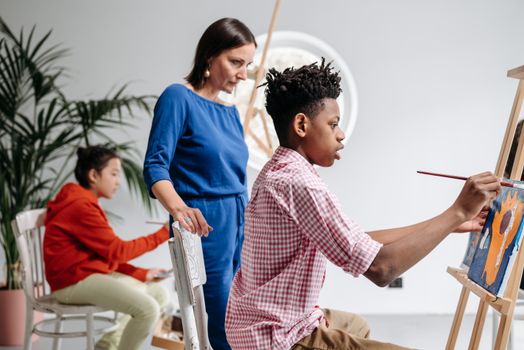
Dynamic art class scene with teacher guiding young students as they paint on canvases. Photo: Pavel Danilyuk / Pexels
Once you have your essential supplies, the next step on your journey of how to start painting in South Africa is to delve into fundamental techniques. Don't be intimidated; every master artist started with the basics. Understanding these core principles will build a solid foundation for your creative expression. **Colour Theory:** This is perhaps the most crucial starting point. Learn about primary, secondary, and tertiary colours, and how to mix them. Understand warm and cool colours, and how they affect mood and perspective in your painting. Experiment with creating tints (adding white), shades (adding black), and tones (adding grey) to expand your palette. A colour wheel can be an invaluable tool. **Brush Strokes:** Different brushes create different marks. Practice various strokes: long, flowing lines; short, choppy marks; dabbing; dry brushing; and washes. Experiment with the pressure you apply and the angle of the brush to see the diverse effects you can achieve. This control will allow you to create texture, define shapes, and add detail. **Composition:** How you arrange elements on your canvas significantly impacts the viewer's experience. Learn about the rule of thirds, leading lines, negative space, and focal points. Simple compositions often work best for beginners, allowing you to focus on colour and form without getting overwhelmed. **Light and Shadow (Value):** Understanding value – the lightness or darkness of a colour – is key to creating depth and dimension in your paintings. Practice creating value scales using a single colour, from its lightest tint to its darkest shade. This will help you see and represent three-dimensional forms on a two-dimensional surface. **Perspective:** Even basic understanding of perspective can elevate your landscape or still-life paintings. Start with one-point perspective to create the illusion of depth in a straightforward manner. **Finding Local Guidance and Community:** South Africa boasts a vibrant art community eager to welcome new members. * **Art Classes and Workshops:** Many art centres, community colleges, and independent studios across major cities like Cape Town, Johannesburg, Durban, and Pretoria offer beginner-friendly classes. These provide structured learning, direct feedback, and opportunities to meet fellow artists. Search online for 'beginner painting classes [your city, South Africa]'. * **Online Tutorials:** Platforms like YouTube, Skillshare, and Domestika host countless tutorials, many by South African artists, teaching specific techniques or guiding you through complete projects. This offers flexibility and affordability. * **Art Groups and Societies:** Join local art societies or Facebook groups dedicated to South African art. These platforms are excellent for sharing your work, asking questions, getting critiques, and finding out about local exhibitions or meet-ups. * **Galleries and Exhibitions:** Regularly visit local art galleries and exhibitions. Observing the work of established artists, particularly those who depict South African themes, can be incredibly inspiring and educational. You can learn a lot by analysing their techniques, compositions, and colour choices. Remember, learning to paint is an ongoing process. Embrace experimentation, don't fear mistakes, and celebrate every small victory. The South African art scene is rich and welcoming, offering ample resources to help you hone your skills and find your artistic voice. For more inspiration, explore the diverse history of South African contemporary art.

Common Pitfalls for Beginner Painters and How to Overcome Them
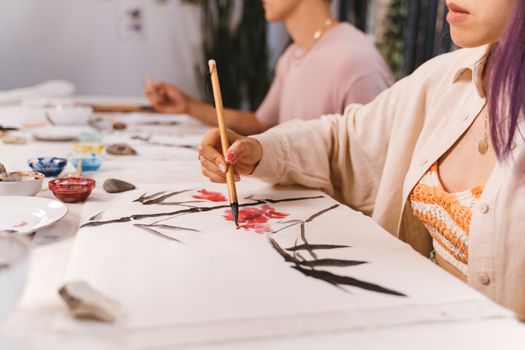
Close-up of a woman painting with a brush in an art class, focusing on creativity and technique. Photo: AI25.Studio AI GENERATIVE / Pexels
Starting any new creative endeavour comes with its challenges, and painting is no exception. For those learning how to start painting in South Africa, being aware of common pitfalls can help you navigate your initial artistic journey with greater ease and less frustration. **1. Expecting Instant Perfection:** Many beginners get discouraged when their first few paintings don't resemble the masterpieces they envision. This is perhaps the most common pitfall. Art is a skill developed over time through consistent practice and learning. * **Solution:** Embrace the learning process. Understand that every artist, no matter how accomplished, started somewhere. Focus on small improvements rather than perfect outcomes. Celebrate the act of creation itself. **2. Over-reliance on Expensive Supplies:** The belief that you need top-tier, costly materials to create good art is a myth. While quality matters, it's not the primary determinant of your artistic success. * **Solution:** Start with good quality student-grade materials, as discussed earlier. They are more affordable and perfectly adequate for learning. Invest in professional-grade supplies only when you understand your preferences and needs. **3. Fear of Making Mistakes:** Many beginners are hesitant to put brush to canvas, fearing they'll 'ruin' their work. This paralysis by analysis stifles creativity. * **Solution:** Treat every painting as an experiment. Understand that mistakes are part of the learning curve. Use cheaper paper or canvas boards for practice, where you feel less pressure to create a masterpiece. Sometimes, the 'mistakes' lead to unexpected and beautiful discoveries. **4. Not Practising Regularly:** Like any skill, painting requires consistent effort. Sporadic attempts will lead to slower progress and potential loss of motivation. * **Solution:** Dedicate a specific time each week, even if it's just an hour, to paint. Make it a routine. Consistency is more important than the duration of each session. **5. Ignoring Basic Principles:** Jumping straight into complex subjects without understanding fundamental concepts like colour theory, composition, or value can lead to frustration. * **Solution:** Spend time learning and practising the basics. There are countless free resources online and affordable beginner classes. A strong foundation will make tackling more ambitious projects much easier. **6. Comparing Yourself to Others:** In the age of social media, it's easy to compare your beginner efforts to the polished work of experienced artists. This can be highly demotivating. * **Solution:** Focus on your own progress. Your artistic journey is unique. Draw inspiration from others, but avoid direct comparisons that diminish your own efforts. **7. Lack of Inspiration or Subject Matter:** Sometimes, artists get stuck on what to paint. * **Solution:** Look around you! South Africa offers endless inspiration. Paint a still life of fruits from your kitchen, sketch a local building, or capture the vibrant colours of a street market. Start with subjects that genuinely interest you. **8. Poor Lighting or Workspace:** An uncomfortable or poorly lit workspace can hinder your progress and enjoyment. * **Solution:** Find a well-lit area, ideally with natural light. Ensure your setup is comfortable and that you have all your supplies within easy reach. A dedicated space, even a small one, can significantly impact your creative flow. Overcoming these common pitfalls is about shifting your mindset, embracing the journey, and being kind to yourself. Every stroke is a step forward.

Comparison

FeatureAcrylics (Beginner-Friendly)Watercolours (Accessible)Oils (Advanced Potential)
Drying TimeFastFast (but re-workable)Slow
Clean-upWaterWaterSolvents/Oil Cleaners
VersatilityHigh (thick to thin)Medium (transparency)High (rich textures)
Cost for BeginnersModerateLow to ModerateModerate to High
OpacityOpaque (can be transparent)TransparentOpaque
Best ForBold colours, mixed mediaLandscapes, delicate workRich detail, blending
Ease of Use (Beginner)

What Readers Say

"This guide truly demystified how to start painting in South Africa for me. I was overwhelmed by choices, but the advice on local supplies and classes was invaluable. I'm now confidently attending my first art workshop!"

Thandiwe Dlamini · Johannesburg, Gauteng

"I've always wanted to paint, and this article was the perfect push. The section on basic techniques gave me the confidence to pick up a brush. Knowing where to find supplies locally made it so much easier to get started."

Liam Van der Merwe · Cape Town, Western Cape

"Following these steps, I went from never having painted to creating my first landscape in just a few weeks. The tips on overcoming common pitfalls were especially helpful in keeping me motivated and seeing progress."

Naledi Mkhize · Durban, KwaZulu-Natal

"A very comprehensive guide for beginners. While I wished for a few more specific recommendations for online South African art communities, the general advice on supplies and techniques was spot-on and extremely practical."

Pieter Botha · Pretoria, Gauteng

"As someone living outside the major hubs, the emphasis on online resources and general stationery stores for supplies was a lifesaver. This article truly understands the unique aspects of how to start painting in South Africa."

Zola Ndlovu · Gqeberha, Eastern Cape

Frequently Asked Questions

What are the most affordable paints to start with in South Africa?

For beginners in South Africa, acrylics and watercolours are generally the most affordable and accessible options. Brands like Dala and Reeves offer student-grade sets that provide good quality without a high price tag, making them perfect for initial experimentation and learning techniques.

Is it too late to start painting as an adult in South Africa?

Absolutely not! It's never too late to start painting. Many adults in South Africa discover their passion for art later in life. The local art scene is welcoming, with numerous beginner classes and workshops designed for all age groups, providing a supportive environment for late bloomers.

How can I find art classes or workshops near me in South Africa?

To find art classes, start by searching online for 'beginner painting classes [your city, South Africa]' or 'art workshops [your region, South Africa]'. Check local community centres, art galleries, and independent art studios. Social media groups for local artists can also be a great resource for recommendations.

What's the typical cost of basic painting supplies in South Africa?

The cost can vary, but a basic starter kit for acrylics or watercolours (including a small set of paints, a few brushes, and some paper or canvas boards) can range from R300 to R800. Investing in slightly better quality student-grade materials often provides a more satisfying experience than the cheapest options.

Should I focus on a specific style when I'm just starting out?

When you're first learning how to start painting in South Africa, it's best not to limit yourself to one specific style. Experiment with different mediums, subjects, and approaches. This exploration will help you discover what you enjoy most and naturally lead you towards developing your unique artistic voice over time.

Who should consider starting a painting hobby in South Africa?

Anyone looking for a creative outlet, a stress-relieving activity, or a new way to express themselves should consider starting a painting hobby in South Africa. It's ideal for those who appreciate visual arts, enjoy hands-on activities, and are open to learning a new skill regardless of prior experience.

Are there any health risks associated with painting materials?

For most beginner-friendly materials like acrylics and watercolours, risks are minimal. Always ensure good ventilation, especially if using spray fixatives or oil painting mediums that might contain solvents. Avoid ingesting paint and wash hands thoroughly after painting. Always read product labels for safety information.

How might South Africa's unique culture influence my painting journey?

South Africa's vibrant culture, diverse landscapes, rich history, and dynamic social fabric offer endless inspiration. You might find yourself drawn to painting local wildlife, bustling street scenes, traditional patterns, or interpreting historical narratives. This unique context can deeply enrich your artistic themes and perspectives.

Ready to transform your vision into vibrant art? Starting your painting journey in South Africa is an accessible and rewarding adventure. Embrace the process, gather your initial supplies, and let the rich tapestry of this nation inspire your every brushstroke. Begin your creative exploration today and discover the joy of painting!

Topics: how to start painting south africapainting supplies south africaart classes cape townsouth african art techniquesbeginner painting tips
Leo List
Brampton weed
Adultwork