✓ No prior experience is necessary to start painting as a hobby.
✓ Acrylics are often recommended for beginners due to their versatility and quick drying time.
✓ Starting with basic supplies can save money and reduce overwhelm.
✓ Consistent practice and experimentation are key to improvement and enjoyment.
How It Works
1
Gather Your Basic Supplies
Acquire essential paints, brushes, and surfaces without overspending. Focus on quality over quantity to begin your artistic adventure.
2
Learn Fundamental Techniques
Familiarize yourself with colour mixing, brush strokes, and basic composition. Online tutorials and local workshops are excellent starting points.
3
Practice Consistently & Experiment
Dedicate regular time to paint, even if just for short periods. Don't be afraid to try different styles and subjects to find what you love.
4
Embrace the Process, Not Just the Outcome
Focus on the joy of creating and learning, rather than perfection. Every stroke is a step in your unique artistic journey.
Unleashing Your Inner Artist: Why Painting is the Perfect Hobby
Photo: Mykhailo Petrenko / Pexels
Have you ever found yourself gazing at a beautiful landscape, a vibrant still life, or a captivating portrait, and wished you could capture that essence on canvas? The desire to create is a fundamental human instinct, and painting offers an incredibly rewarding outlet for this innate urge. Far from being an exclusive pursuit for the 'talented few', painting as a hobby is accessible to everyone, regardless of age, background, or perceived artistic ability. In South Africa, a country rich in diverse landscapes, cultures, and colours, there's an endless wellspring of inspiration waiting to be translated onto your chosen medium.
Starting a new hobby can often feel daunting, especially one that seems to demand a certain level of skill or innate talent. However, painting is less about producing a masterpiece from day one and more about the journey of self-discovery, expression, and mindful engagement. It’s a chance to slow down, observe the world around you with fresh eyes, and translate your unique perspective into a tangible form. Beyond the sheer joy of creation, painting offers a myriad of benefits for your well-being. It’s a powerful stress reliever, allowing you to channel anxieties and frustrations into a positive, productive activity. The focused concentration required can be incredibly meditative, helping to quiet a busy mind and promote a sense of calm. Studies have shown that creative activities like painting can improve cognitive function, enhance problem-solving skills, and even boost self-esteem as you witness your abilities grow.
For many, the initial hurdle is often the fear of failure or the belief that they 'can't draw a straight line'. Let's debunk this myth right now: painting is not about perfection, especially when you're starting out as a hobbyist. It's about exploration, experimentation, and finding your own voice. The beauty of art lies in its subjectivity; what one person considers a flaw, another might see as a unique characteristic. Embracing this mindset is crucial for a fulfilling painting journey. Think of it as a playful adventure rather than a rigorous academic pursuit. There are no grades, no deadlines (unless you set them for yourself!), and no wrong answers. The only 'rule' is to enjoy the process.
Furthermore, painting can be a wonderful way to connect with others. South Africa boasts a vibrant arts community, with workshops, classes, and art groups available in many cities and towns, from Cape Town to Johannesburg, Durban to Port Elizabeth. These communities offer opportunities to share ideas, learn from experienced artists, and find camaraderie with fellow enthusiasts. Whether you prefer the solitude of your own creative space or the stimulating environment of a group setting, painting can open doors to new friendships and shared experiences. So, if you've been harbouring a secret desire to pick up a brush, now is the time to embrace that curiosity. This comprehensive guide will walk you through everything you need to know to confidently embark on your painting journey, right here in South Africa. We'll cover essential supplies, beginner-friendly techniques, and tips for staying inspired, ensuring your experience is as enriching as possible. For more insights into the broader world of creative pursuits, explore our resources on the benefits of engaging with arts.
Essential Tools for the Aspiring Painter: What You Really Need
Photo: Julia Avamotive / Pexels
One of the most common questions for anyone looking to start painting as a hobby is, "What supplies do I need?" The art supply market can be overwhelming, with an endless array of paints, brushes, canvases, and accessories. The good news is that you don't need to break the bank or buy everything at once. Starting with a carefully selected set of basic, good-quality materials will set you up for success without unnecessary expense or confusion.
Let's begin with paints. For beginners, acrylic paints are highly recommended. They are water-soluble, meaning you can clean your brushes with water, and they dry relatively quickly, which is excellent for layering and making quick progress without long waiting times. Acrylics are also incredibly versatile; they can be used thickly like oils or thinned with water to create watercolour-like washes. Look for a beginner's set that includes primary colours (red, blue, yellow), black, and white. Brands like Dala, Reeves, or even local South African brands often offer affordable starter sets that are perfectly adequate. Once you're comfortable, you can expand your palette.
Next up are brushes. Again, resist the urge to buy a massive set. A few versatile brushes will serve you well. A good starting point would be: one large flat brush (for washes and backgrounds), one medium flat or bright brush (for broader strokes), one small round brush (for details), and perhaps a filbert brush (for softer edges). Synthetic brushes are generally best for acrylics as they hold their shape well and are easy to clean. You can find these at art supply stores like The Deckle Edge in Cape Town, Herbert Evans in Johannesburg, or online retailers across South Africa.
For surfaces, canvas boards or stretched canvases are popular choices, but don't limit yourself. For practice, consider using thick paper, like watercolour paper or even a pad of acrylic paper. These are much more affordable and allow you to experiment freely without the pressure of 'wasting' a canvas. Small canvas boards (A4 or A3 size) are also great for getting started. As you progress, you might explore larger canvases or different surfaces like wood panels.
Other essential items include a palette (a ceramic plate, plastic lid, or even wax paper works perfectly), a water container (an old yogurt pot or glass jar), paper towels or an old cloth for wiping brushes, and perhaps an easel. While an easel can be helpful, it's not strictly necessary for beginners. You can easily paint at a table, propping your canvas up against something sturdy. A basic sketch pad and pencil can also be useful for planning compositions or sketching ideas before committing to paint. Remember, the goal is to get started, not to have the most expensive studio. Invest in quality basics, and you can always upgrade or expand your collection as your skills and preferences develop. Many local South African art stores also offer beginner kits that bundle these essentials, providing a convenient and cost-effective way to kickstart your painting journey.
Mastering the Basics: Fundamental Techniques for New Painters
Photo: Галина Ласаева / Pexels
Once you have your supplies, the exciting part begins: putting brush to surface! As a beginner, focusing on a few fundamental techniques will build a strong foundation and boost your confidence. Don't worry about creating masterpieces immediately; instead, concentrate on understanding how your materials behave and how different strokes and colours interact.
One of the first things to explore is colour mixing. Acrylics, like most paints, operate on a primary colour system: red, blue, and yellow. From these three, plus black and white, you can create an astonishing range of hues. Experiment by mixing small amounts of primary colours to create secondary colours (orange, green, purple). Add white to lighten colours and create tints, or a touch of black (sparingly, as it can quickly muddy colours) to darken and create shades. Understanding the colour wheel and complementary colours (opposites on the wheel, like red and green) can help you create vibrant contrasts or harmonious blends. There are numerous free online resources and videos demonstrating basic colour theory that can be incredibly helpful.
Next, let's talk about brush control and different strokes. Each brush shape and size will produce a unique mark. Practice making various strokes: long, sweeping lines; short, choppy marks; dots; and textured dabs. Experiment with how much paint you load onto your brush and how much pressure you apply. A dry brush technique, for example, uses very little paint and creates a textured, broken line, while a wet brush with thinned paint can create smooth washes. Don't be afraid to fill pages with just brushstroke exercises – it's like a musician practicing scales.
Understanding basic composition is also vital. Composition refers to how you arrange elements within your painting. Simple rules like the 'rule of thirds' (dividing your canvas into nine equal sections and placing points of interest along the lines or at their intersections) can instantly improve the balance and visual appeal of your work. Consider your focal point – what is the main subject you want to draw the viewer's eye to? How can you use lines, shapes, and colours to guide their gaze? Even for abstract painting, a sense of balance and flow is important.
Finally, don't underestimate the power of layering. Acrylics dry quickly, making them ideal for building up layers of colour and texture. You can start with a thin wash for a background, then add opaque layers for details, and finally glaze with transparent layers to adjust colours or add depth. This technique allows you to correct mistakes easily and build complexity in your painting. Remember, every painter, no matter how experienced, started exactly where you are. Patience, practice, and a willingness to learn from every stroke are your best tools. For more inspiration on artistic expression, consider exploring different forms of creative arts.
Common Pitfalls and How to Overcome Them: Tips for New Painters
Embarking on a new hobby like painting is an exciting adventure, but like any new skill, it comes with its own set of challenges. Knowing what common pitfalls to expect can help you navigate them with grace and prevent frustration from derailing your artistic journey. Here are some frequent issues new painters face and practical tips on how to overcome them:
* **Fear of the Blank Canvas:** This is perhaps the most universal hurdle. The pristine white surface can feel intimidating, almost as if it's judging your impending creation. The best way to overcome this is to simply start. Don't aim for perfection on your first stroke. Instead, begin with a light wash of colour to cover the white, or do a quick, loose sketch. Think of it as warming up. You can also start with smaller canvases or paper, which feel less daunting. Remember, it's just paint; you can always paint over it or start anew.
* **Comparing Yourself to Others:** In the age of social media, it's easy to fall into the trap of comparing your beginner work to seasoned artists' masterpieces. This is a joy-killer. Every artist has their own unique journey and style, honed over years of practice. Focus on your own progress and celebrate small victories. Your art is an expression of *you*, and that's what makes it valuable. Seek inspiration, not comparison.
* **Over-blending or Muddy Colours:** New painters often try to blend too much, especially with acrylics, which dry quickly. This can lead to muddy, dull colours. To avoid this, work quickly when blending, or try layering colours instead of mixing them extensively on the canvas. Use clean water when rinsing brushes between colours, and keep a separate water pot for darker colours if possible. If a colour looks muddy, let it dry and paint a fresh layer over it.
* **Impatience and Rushing the Process:** Painting is often a slow, deliberate process. Trying to rush can lead to frustration and less satisfying results. Allow layers to dry properly, take breaks to step back and assess your work, and resist the urge to finish a painting in one sitting if it needs more time. Enjoy the journey of creation, not just the destination.
* **Lack of Practice or Consistency:** Like any skill, painting improves with practice. Irregular painting sessions can make it harder to build muscle memory and confidence. Try to set aside dedicated, even if short, periods each week for painting. Consistency, even for 15-30 minutes, is more effective than one long session every few months. Make it a habit, and you'll see progress.
* **Not Learning Basic Principles:** While experimentation is key, understanding fundamental principles like colour theory, composition, and perspective can significantly enhance your work. You don't need to go to art school, but watching tutorials, reading books, or taking a beginner's workshop can provide invaluable guidance and accelerate your learning curve.
* **Fear of 'Wasting' Supplies:** Art supplies can be an investment, leading to a reluctance to use them freely. However, supplies are meant to be used! Think of every brushstroke, even the 'mistakes', as a learning opportunity. The more you use your materials, the more comfortable you'll become with them, and the faster you'll improve. Don't let preciousness hinder your progress. Embrace the mess and the experimentation; that's where true learning happens.
Comparison
Feature
Acrylics (Beginner Recommended)
Watercolours (Alternative 1)
Oils (Alternative 2)
Drying Time
Fast
Moderate
Very Slow
Cleanup
Water
Water
Solvents (Turpentine/Mineral Spirits)
Versatility
High (opaque, transparent, textured)
Medium (transparent washes)
High (rich, blendable)
Cost (Starter Set)
R200-R500
R150-R400
R300-R800+
Beginner Friendliness
✓
✓ (requires practice)
✗ (more challenging)
Opacity
Opaque (can be thinned)
Transparent
Opaque
What Readers Say
★★★★★
"I always wanted to paint but thought I wasn't artistic enough. This guide on how to start painting as a hobby gave me the confidence to buy my first set of acrylics. I'm now painting every weekend and absolutely loving it!"
Lerato M. · Johannesburg, ZA
★★★★★
"The advice on starting with basic supplies was spot on. I didn't feel overwhelmed by choices and could just focus on learning. It's been incredibly relaxing and a great way to unwind after work."
Pieter V. · Cape Town, ZA
★★★★★
"Following these steps, I've completed three small paintings I'm actually proud of! The section on overcoming the fear of the blank canvas was particularly helpful for me. Highly recommend for anyone looking to pick up a brush."
Nandi K. · Durban, ZA
★★★★★
"This article is a solid starting point. While I still struggle with colour mixing, the tips on consistency have kept me going. It's a rewarding hobby, and this guide made it feel achievable."
Thabo S. · Pretoria, ZA
★★★★★
"As a busy mom, I needed a hobby that allowed for short bursts of creativity. Acrylics, as suggested, are perfect because they dry fast. This guide truly helped me carve out my own artistic space."
Jessica L. · Gqeberha, ZA
Frequently Asked Questions
What is the absolute best paint to start with for a beginner?
For beginners, acrylic paints are widely recommended due to their versatility, quick drying time, and easy cleanup with water. They are less toxic than oils and more forgiving than watercolours, allowing for easier layering and corrections. A basic set of primary colours, black, and white is an excellent starting point.
I'm worried I have no artistic talent. Can I still learn to paint?
Absolutely! Artistic talent is often a myth; what truly matters is practice, patience, and a willingness to learn. Painting as a hobby is about the process and personal expression, not about creating gallery-worthy art from day one. Embrace experimentation, enjoy the journey, and you'll be surprised at what you can achieve.
How do I choose the right brushes when there are so many types?
Start with a small, versatile set. A good beginner's selection includes one large flat brush for washes, a medium flat or bright brush for broader strokes, and a small round brush for details. Synthetic brushes are generally good for acrylics. You don't need dozens of brushes; a few well-chosen ones will suffice for most beginner projects.
How much does it cost to start painting as a hobby in South Africa?
You can start painting as a hobby quite affordably in South Africa. A basic starter kit with acrylic paints, a few brushes, and some canvas boards or paper can range from R300 to R800. As you progress, you might invest in more specialised supplies, but initial costs are manageable, making it an accessible hobby.
Is painting a better hobby than drawing for beginners?
Neither is inherently 'better'; it depends on personal preference. Painting offers immediate gratification with colour and texture, while drawing focuses on line, form, and shading. Many artists start with drawing to build foundational skills, but you can absolutely jump straight into painting. Often, the two complement each other, and you might find yourself doing both!
Who should consider taking up painting as a hobby?
Anyone looking for a creative outlet, a stress-relieving activity, or a way to express themselves should consider painting. It's ideal for individuals seeking mindfulness, a new challenge, or a means to explore their inner world. It's suitable for all ages and requires no prior experience, making it universally accessible.
Are there any health risks associated with painting supplies?
Most modern beginner-friendly paints, like acrylics and watercolours, are non-toxic and safe for general use. However, always check product labels for safety information. If using oil paints, some solvents can emit fumes, so ensure good ventilation. Always wash your hands thoroughly after painting, especially before eating, to avoid accidental ingestion of paint particles.
What are the emerging trends in hobby painting that I should be aware of?
Current trends in hobby painting include a rise in digital painting (using tablets and software), fluid art (pour painting), and a renewed interest in traditional techniques like watercolour botanicals. There's also a strong movement towards sustainable art practices and using eco-friendly materials. Exploring these can add an exciting dimension to your hobby.
Ready to transform your blank canvas into a vibrant expression of yourself? Take the first step and embrace the incredibly rewarding journey of how to start painting as a hobby. Your artistic adventure awaits!

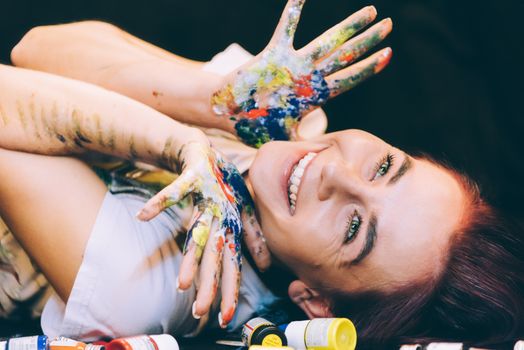 Photo: Mykhailo Petrenko / Pexels
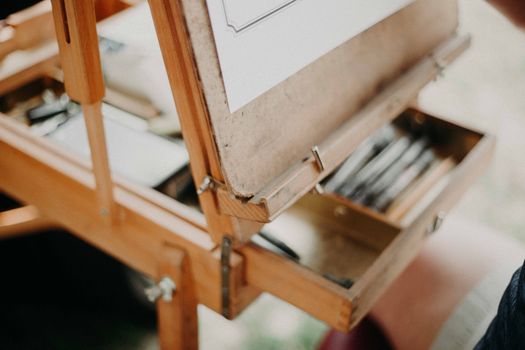 Photo: Julia Avamotive / Pexels
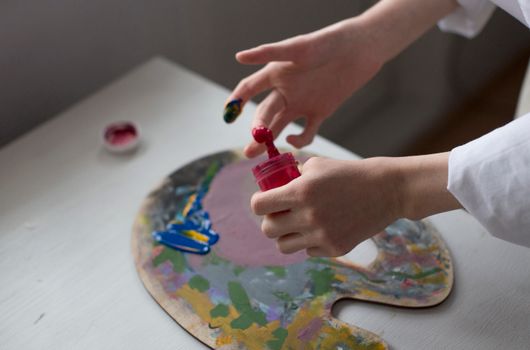 Photo: Галина Ласаева / Pexels