A Deep Dive into the History of South African Art
history of south african art

A Deep Dive into the History of South African Art

Journey through millennia of creativity and cultural expression that shaped a nation's artistic soul.

Begin Your Exploration

Key Takeaways

  • ✓ South African art dates back tens of thousands of years, primarily with San rock art.
  • ✓ Colonialism introduced Western art forms and significantly impacted indigenous artistic practices.
  • ✓ Apartheid-era art became a powerful tool for protest, resistance, and social commentary.
  • ✓ Post-apartheid art reflects a complex nation grappling with identity, reconciliation, and memory.

How It Works

1
Understand Pre-Colonial Foundations

Begin by appreciating the deep roots of South African art in the San rock paintings. These ancient works offer unparalleled insights into early human life and spiritual beliefs.

2
Explore Colonial Influences

Examine how European settlement introduced new artistic mediums, techniques, and themes. This period saw a fascinating blend and clash of indigenous and Western aesthetics.

3
Analyze Apartheid-Era Resistance

Delve into the powerful and often subversive art created during apartheid. Understand how artists used their craft to challenge injustice, express suffering, and envision a different future.

4
Discover Post-Apartheid Expressions

Conclude by exploring the vibrant and diverse contemporary art scene. This era grapples with the legacy of apartheid, national identity, and South Africa's place in a globalized world.

The Ancient Roots: Pre-Colonial South African Art
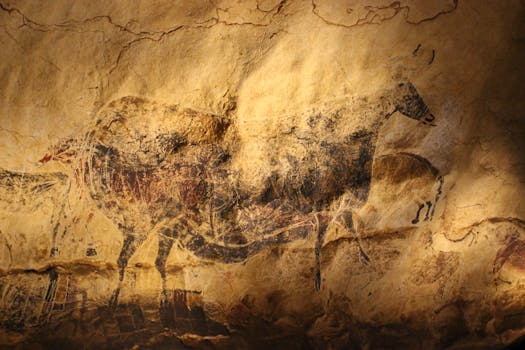
Explore the historic Lascaux cave painting, a UNESCO World Heritage site. Photo: toshihiko tanaka / Pexels
The narrative of South African art does not begin with European contact, but rather tens of thousands of years ago, etched onto the very rock faces of the subcontinent. The most profound and enduring testament to this ancient heritage is the San rock art, found in abundance across regions like the Drakensberg Mountains and the Cederberg. These intricate paintings and engravings, primarily created by the San people (also known as Bushmen), are not merely decorative but deeply spiritual and narrative. They depict scenes of daily life – hunting, gathering, dancing – alongside complex spiritual rituals, mythological creatures, and shamanic trances. The artists often used natural pigments derived from ochre, charcoal, and minerals, mixed with binders like blood or egg white, creating durable works that have withstood millennia. Understanding San rock art requires an appreciation of their worldview, where the physical and spiritual realms were intrinsically linked. Animals, particularly eland, held immense symbolic power, often representing spiritual potency. Shamans, entering trance states, would 'travel' to the spirit world, and their experiences were meticulously recorded on rock surfaces, serving as a visual archive of their cosmology. This art was functional, pedagogical, and sacred, guiding future generations and connecting communities to their ancestors and the divine. Beyond the San, other indigenous groups, such as the Khoi and later the Bantu-speaking peoples, also contributed to early artistic expressions, albeit often in more ephemeral forms like body painting, beadwork, and intricate pottery. While less remains of these early works due to their perishable nature, archaeological discoveries continually expand our understanding of the rich artistic tapestry that predates colonial arrival. These early forms set a foundational precedent for the expressive and symbolic depth that would characterize much of the later South African cultural heritage, demonstrating a profound connection to the land and its spiritual forces. The meticulous detail and narrative complexity of San rock art, in particular, challenge any simplistic notions of 'primitive' art, revealing sophisticated artistic practices and a deep philosophical outlook. It's a living heritage, continuously interpreted and re-evaluated, offering a direct window into the earliest human expressions on the continent.

Colonial Encounters and the Hybridization of Art Forms
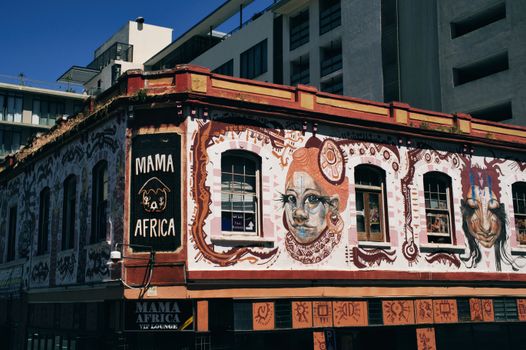
Vibrant murals decorate the facade of a building on Long Street, Cape Town, showcasing local art. Photo: Travel with Lenses / Pexels
The arrival of European settlers from the 17th century onwards marked a significant turning point in the history of South African art. With the Dutch East India Company's establishment at the Cape, and subsequent British colonization, new artistic traditions, materials, and patronage systems were introduced. European artists, primarily landscape painters and portraitists, began to document the 'exotic' landscapes, flora, fauna, and indigenous peoples, often through a colonial lens that exoticized or romanticized the 'other.' Early colonial art, therefore, frequently served as a tool for classification and control, reflecting European perspectives rather than indigenous realities. However, the interaction was not unidirectional. Indigenous artists, observing new techniques and materials, began to incorporate them into their own practices. While traditional forms like beadwork, pottery, and weaving continued, new mediums such as drawing and painting on paper or canvas, and later photography, offered fresh avenues for expression. This period saw the emergence of a hybrid aesthetic, where Western academic styles occasionally merged with local subject matter and sensibilities. Mission schools, for instance, sometimes provided art education, inadvertently fostering a new generation of black artists who, while exposed to Western techniques, often used their skills to depict their own communities and experiences. The late 19th and early 20th centuries witnessed the gradual professionalization of art in South Africa, with the establishment of art schools and galleries, predominantly catering to a white elite. Artists like Thomas Baines and George French Angas documented the colonial expansion, while later figures like J.H. Pierneef developed a distinct South African landscape tradition, often imbued with a sense of national identity tied to the Afrikaner experience. This era also saw the beginning of black artists gaining recognition, albeit often within segregated contexts. The impact of colonialism was complex: it introduced new tools and perspectives but also suppressed, marginalized, or misinterpreted indigenous artistic practices, setting the stage for the socio-political tensions that would define much of 20th-century South African art.

Art as Resistance: The Apartheid Era (1948-1994)
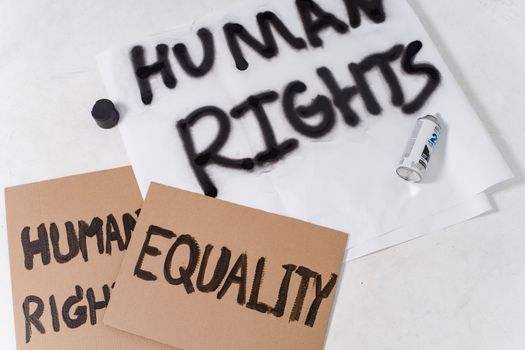
Close-up of protest materials promoting human rights and equality. Photo: Sora Shimazaki / Pexels
The apartheid era represents one of the most poignant and politically charged periods in the history of South African art. As the institutionalized system of racial segregation and discrimination tightened its grip, art became a crucial, often subversive, weapon of resistance, documentation, and expression. Black artists, in particular, found their voices amplified through their work, chronicling the harsh realities of forced removals, poverty, injustice, and state brutality. Art became a visual testimony to human suffering and resilience under an oppressive regime. Artists like Gerard Sekoto, Ernest Mancoba, and George Pemba, though often working in isolation or exile, depicted the lives of black South Africans with profound empathy and insight, laying the groundwork for a socially engaged art practice. Later generations, including the 'township artists' of the 1960s and 70s, such as Dumile Feni and John Koenakeefe Mohl, created powerful, often harrowing, images of township life, political violence, and the psychological impact of apartheid. Their work was frequently raw, expressive, and confrontational, challenging the state's narrative of racial superiority. White artists also played a significant role, often using their privilege to critique the system from within. Figures like Irma Stern and Maggie Laubser, though active earlier, explored themes of African identity and landscape with a modernist sensibility, while later artists such as William Kentridge and Jane Alexander created allegorical and deeply symbolic works that interrogated power, memory, and the human condition. Kentridge's animated drawings, for instance, became internationally recognized for their nuanced exploration of South Africa's past. Galleries and art institutions, often segregated, presented a complex landscape. While some adhered to apartheid policies, others became clandestine spaces for dialogue and resistance. The international anti-apartheid movement also provided platforms for South African artists in exile, bringing their powerful messages to a global audience. Art during this period was not merely aesthetic; it was a vital tool for protest, a means of preserving dignity, and a hopeful projection of a future free from oppression. It solidified the notion that art can be a catalyst for social change, reflecting a nation's struggle for liberation and justice. This era profoundly shaped the thematic concerns and artistic approaches that continue to resonate in contemporary South African art, cementing its role as a powerful voice for social consciousness and human rights.

Post-Apartheid: Identity, Reconciliation, and a Global Voice
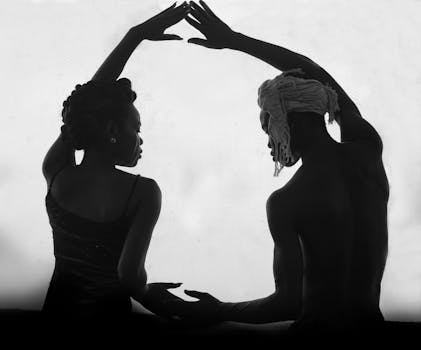
Silhouette of a man and woman creating a graceful dance pose, capturing unity and elegance in monochrome. Photo: Teddy tavan / Pexels
The dawn of democracy in 1994 ushered in a new era for South African art, characterized by a complex process of grappling with the past, forging a new national identity, and engaging with global artistic trends. The immediate post-apartheid period saw artists confronting themes of truth and reconciliation, memory, trauma, and the challenges of building a non-racial society. The euphoria of liberation was often tempered by the deep scars of apartheid, leading to art that was both celebratory and introspective. Artists began to explore the nuances of 'ubuntu' – the philosophy of interconnectedness – and the complexities of belonging in a multicultural nation. Identity, race, gender, and sexuality became prominent themes, often interrogated through personal narratives and collective histories. The 'Rainbow Nation' ideal, while aspirational, also presented new artistic challenges, prompting artists to question what it truly meant to be South African in a post-colonial, post-apartheid context. Contemporary South African art is incredibly diverse, encompassing a wide range of mediums from painting, sculpture, and photography to video art, performance, and installation. Artists like Zanele Muholi use photography to challenge stereotypes and celebrate black LGBTQI+ identities. Mary Sibande's fantastical sculptures explore the black female body and historical narratives. Athi-Patra Ruga creates vibrant, often satirical, performances and tapestries that critique post-colonial power structures. Key trends include a continued engagement with socio-political issues, often with a critical eye on the promises and failures of democracy. There's a strong focus on reclaiming marginalized histories, reinterpreting traditional African aesthetics within a contemporary framework, and exploring the impact of globalization on local cultures. South African artists have achieved significant international recognition, participating in major biennials and exhibitions worldwide, and their work is highly sought after by collectors and institutions. This global presence has further diversified the artistic landscape, as artists engage in cross-cultural dialogues while firmly rooting their practice in the unique experiences and complexities of their home country. The post-apartheid era is a vibrant testament to the resilience and innovation of South African artists, who continue to shape the national narrative and contribute significantly to the global art conversation.

Comparison

EraKey CharacteristicsDominant ThemesNotable Artists
Pre-ColonialSpiritual, narrative, symbolicShamanism, hunting, cosmologySan rock artists (anonymous)
ColonialDocumentary, landscape, portraitureEuropean perspective, exoticizationThomas Baines, J.H. Pierneef
ApartheidProtest, social commentary, resistanceInjustice, suffering, identityGerard Sekoto, William Kentridge
Post-ApartheidDiverse, identity, reconciliationMemory, nation-building, globalizationZanele Muholi, Mary Sibande

What Readers Say

"This article beautifully captures the essence and evolution of South African art. The depth of historical context provided is truly outstanding, making me appreciate our artistic heritage even more."

Thandiwe M. · Cape Town, WC

"As an art enthusiast, I found this a comprehensive and insightful journey. It highlights the often-overlooked indigenous contributions and the powerful role art played during apartheid."

David L. · Johannesburg, GP

"I always wanted to understand the history of South African art better, and this piece delivered! It clarified the different periods and their unique artistic expressions, leaving me feeling truly informed."

Naledi P. · Durban, KZN

"A very well-researched article. While extensive, I would have loved to see a bit more on specific regional art forms beyond the major historical movements, but still highly recommended."

Michael S. · Pretoria, GP

"This article provided an excellent overview for someone new to South African art. It's an invaluable resource for understanding the cultural and political narratives embedded in its artistic history."

Sarah J. · New York, USA

Frequently Asked Questions

What is the earliest form of South African art?

The earliest and most significant form of South African art is San rock art, dating back tens of thousands of years. These ancient paintings and engravings, found in various sites across the country, depict hunting scenes, spiritual rituals, and mythological figures, offering profound insights into the San people's cosmology and daily life.

How did apartheid impact South African art?

Apartheid profoundly impacted South African art by making it a powerful tool for protest, resistance, and social commentary. Artists used their work to expose injustices, document human suffering, and critique the oppressive regime, often at great personal risk. It fostered a strong tradition of socially engaged art.

Where can I see examples of South African art?

You can experience South African art in numerous institutions. Major collections are housed at the Iziko South African National Gallery in Cape Town, the Johannesburg Art Gallery, and the Durban Art Gallery. Additionally, rock art sites like the Drakensberg Mountains offer direct encounters with ancient San art.

Is contemporary South African art recognized internationally?

Yes, contemporary South African art has gained significant international recognition. Artists like William Kentridge, Zanele Muholi, and Mary Sibande exhibit regularly in major galleries and biennials worldwide, and their work is highly sought after by international collectors, cementing South Africa's place on the global art stage.

How does South African art reflect its cultural diversity?

South African art is a vibrant tapestry reflecting its immense cultural diversity. From the spiritual depth of San rock art and the intricate beadwork of various indigenous groups to the hybrid forms born from colonial encounters and the post-apartheid explorations of identity, race, and reconciliation, art has consistently mirrored and shaped the nation's multicultural narrative.

Who should explore the history of South African art?

Anyone interested in art history, African studies, cultural anthropology, or the social impact of art should explore the history of South African art. It offers a unique lens through which to understand human resilience, cultural exchange, and the power of creative expression in times of profound change.

Are there risks in interpreting ancient South African art?

Yes, interpreting ancient South African art, particularly San rock art, carries risks of misinterpretation if not approached with cultural sensitivity and expert knowledge. Early colonial interpretations often imposed Western frameworks, leading to inaccuracies. Contemporary scholarship emphasizes collaborating with descendant communities and understanding the original cultural and spiritual contexts to avoid appropriating or misrepresenting these sacred works.

What are the future trends in South African art?

Future trends in South African art are likely to continue exploring themes of identity, post-colonialism, and social justice, often through innovative digital and multidisciplinary practices. There's a growing emphasis on environmental concerns, pan-African dialogues, and the re-evaluation of historical narratives, ensuring its continued relevance and dynamism on the global stage.

Embark on a captivating journey through the history of South African art. From ancient rock shelters to contemporary galleries, discover the profound stories, resilience, and breathtaking creativity that define this nation's artistic legacy. Let its vibrant narrative inspire and connect you to the heart of South Africa.

Topics: history of south african artpre-colonial art South Africacontemporary South African artsan rock artpost-apartheid art
Leo List

DK Escorts LU Escorts AT Escorts SE Escorts FI Escorts CH Escorts DE Escorts HR Escorts IE Escorts GR Escorts CZ Escorts NO Escorts BE Escorts FR Escorts SI Escorts IL Escorts NL Escorts PL Escorts HU Escorts ES Escorts IT Escorts PT Escorts SK Escorts RO Escorts ZA Escorts UY Escorts US Escorts UK Escorts NZ Escorts AU Escorts
Brampton weed
Adultwork EstrelaBet Vai de Bet R7 Bet Betão Galera Bet Rainbet Bet9ja Shop SportyBet BetKing Sisal Loto Foot Hollywoodbets YesPlay Odibets RushBet Jugabet BetWarrior BetCity MSport betPawa Fortebet