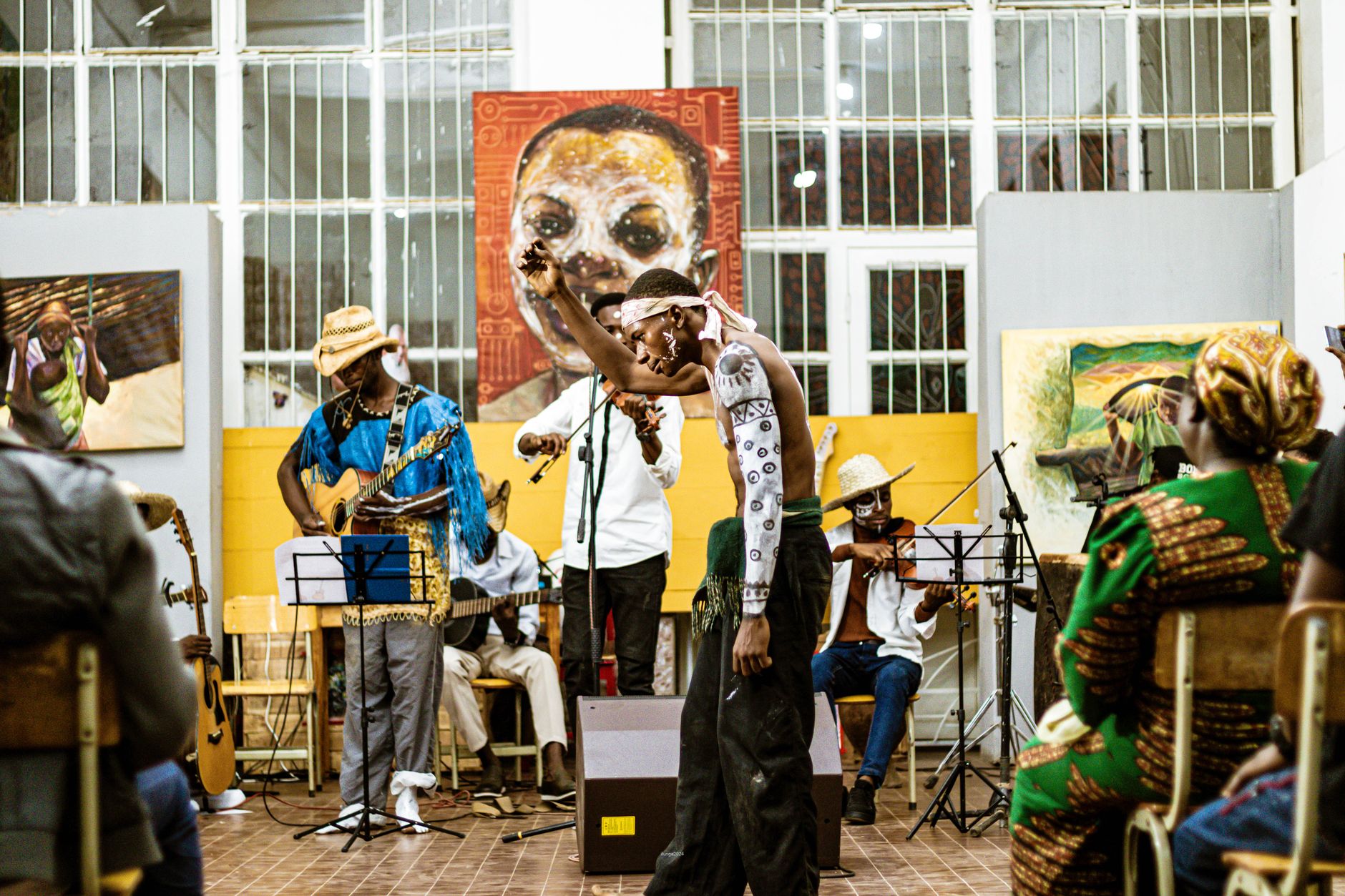
Uncovering Famous South African Artists Names & Legacies
famous south african artists names

Uncovering Famous South African Artists Names & Legacies

Journey through the rich tapestry of South African art, celebrating the iconic figures who shaped its narrative.

Discover Their Stories

Key Takeaways

  • ✓ South African art reflects a diverse cultural heritage and complex socio-political history.
  • ✓ Many famous South African artists gained international recognition despite apartheid-era restrictions.
  • ✓ Contemporary South African art continues to challenge norms and explore identity.
  • ✓ The country boasts a vibrant arts scene with numerous galleries and institutions.

How It Works

1
Explore Historical Context

Understand the socio-political backdrop that influenced early South African artists. This context is crucial for appreciating their thematic concerns and artistic expressions.

2
Discover Key Movements

Identify significant art movements and periods, from early modernism to resistance art and post-apartheid contemporary styles. Each movement contributed uniquely to the national art identity.

3
Meet the Artists

Delve into the lives and works of individual famous South African artists names. Learn about their techniques, inspirations, and lasting contributions to the art world.

4
Engage with Their Legacy

Consider how these artists' legacies continue to inspire new generations and shape the global understanding of South African culture. Explore exhibitions and collections featuring their work.

The Pioneering Spirit: Early Famous South African Artists Names
Close-up of a person painting abstract brushstrokes on canvas, showcasing artistic creativity. Photo: Greta Hoffman / Pexels
South Africa's artistic landscape is a vibrant testament to its complex history, diverse cultures, and profound human experiences. The journey through its artistic evolution reveals a lineage of remarkable individuals whose creativity transcended societal barriers and political upheavals. When we delve into famous South African artists names, we embark on an exploration that goes beyond mere aesthetics, touching upon narratives of identity, resistance, and resilience. The early pioneers laid the groundwork, often working against formidable odds to establish a distinct South African artistic voice. Artists like Irma Stern and Gerard Sekoto are seminal figures in this early period. Irma Stern, a German-born South African artist, is celebrated for her expressive portraits and vibrant depictions of local life, particularly from the Zulu and Swazi communities, as well as her travels across Africa and Europe. Her bold use of colour and strong brushstrokes captured the essence of her subjects, offering a unique ethnographic perspective filtered through a modernist lens. Stern’s work, often controversial in its time for its directness and rejection of conventional European aesthetics, is now highly sought after and commands significant attention in international art markets. Her legacy includes not just her prolific output but also her commitment to showcasing the beauty and dignity of African peoples, often challenging colonial perceptions. Her home in Cape Town is now a museum dedicated to her work, a testament to her enduring impact on South African arts. Gerard Sekoto, on the other hand, represents a different, yet equally crucial, pioneering spirit. As one of the first black South African artists to gain international recognition, Sekoto's work provided an intimate and poignant glimpse into the lives of black South Africans under apartheid. His vibrant street scenes and portraits from Sophiatown, District Six, and Eastwood are not just aesthetic achievements but vital historical documents. Sekoto's ability to capture the everyday struggles, joys, and resilience of his community with empathy and dignity, using a post-impressionistic style, made him a powerful voice for the voiceless. His move to Paris in 1947, while driven by a desire for artistic freedom away from the oppressive regime, also marked a significant moment for South African art on the global stage. He continued to paint and compose music, his art always rooted in his South African identity. These early famous South African artists names set a precedent for future generations, demonstrating the power of art to reflect, challenge, and shape society.

Art as Resistance: Iconic Figures During Apartheid
Artistic group portrait with brushes in hats, conveying creativity and intensity. Photo: EZA HELDER NGAM / Pexels
The apartheid era (1948-1994) profoundly shaped South African art, transforming it into a powerful tool for resistance, commentary, and survival. Artists during this period often faced censorship, persecution, and exile, yet their resolve to express the human condition under an unjust system only strengthened. This era produced some of the most famous South African artists names, whose work became synonymous with the struggle for freedom and equality. Among these, Dumile Feni, widely known as the 'Goya of the townships,' stands out for his raw, emotionally charged depictions of suffering and defiance. His drawings and sculptures, characterized by their distorted, elongated figures, powerfully conveyed the psychological and physical brutality of apartheid. Feni's work was not merely protest art; it was a profound exploration of human dignity amidst dehumanization, an unflinching gaze into the soul of a nation in turmoil. Exiled in 1968, he continued to produce significant works abroad, but his heart remained in South Africa, evident in the persistent themes of exile, longing, and injustice in his art. Another monumental figure is Ernest Mancoba, who moved to Paris in 1938 and became part of the avant-garde CoBrA movement. While his artistic journey took him away from South Africa physically, his work consistently explored themes of African spirituality and identity, challenging Eurocentric art narratives. His abstract, totemic figures sought a universal language, yet were deeply rooted in his African heritage, making him an important bridge between African and European modernism. Mancoba's contribution to global art history as a pioneering black abstractionist is increasingly recognized. The visual arts also saw the emergence of powerful female voices. Helen Sebidi, for instance, became known for her vibrant, often large-scale paintings that blend traditional African storytelling with contemporary issues. Her work often features mythical creatures and human figures, reflecting on ancestral wisdom, the complexities of urban life, and the enduring strength of women. Sebidi's art is a testament to the resilience of cultural identity and the power of art to heal and educate. Her unique style and powerful narratives have earned her numerous accolades and a prominent place among famous South African artists names. These artists, through their diverse styles and powerful messages, not only documented a dark chapter in history but also contributed significantly to the global discourse on human rights and artistic freedom. Their legacies continue to inspire and remind us of art's capacity to challenge, heal, and unite.

Post-Apartheid Visions: Contemporary Famous South African Artists Names

Open vintage box of lino cutters on a wooden workshop table, showcasing craftsmanship tools. Photo: FFD Restorations / Pexels
The dawn of democracy in South Africa ushered in a new era for its arts, marked by freedom of expression and a renewed engagement with national identity, reconciliation, and the complexities of a post-apartheid society. Contemporary famous South African artists names are at the forefront of this vibrant period, pushing boundaries, challenging perceptions, and gaining international acclaim. William Kentridge is arguably the most globally recognized contemporary South African artist. His multidisciplinary practice, encompassing drawing, animation, film, sculpture, and opera direction, profoundly explores themes of apartheid, colonialism, memory, and the construction of history. Kentridge's signature charcoal drawings, often animated through stop-motion techniques, create moving narratives that are both deeply personal and universally resonant. His work is characterized by its intellectual rigor, emotional depth, and innovative approach to storytelling, making him a critical voice in contemporary art. His exhibitions have graced major institutions worldwide, solidifying his status as a titan in the global art scene. Zanele Muholi is another powerful voice whose photographic work challenges and redefines representations of black lesbian, gay, bisexual, transgender, queer, intersex, and asexual (LGBTQIA+) individuals in South Africa. Through their series like 'Faces and Phases' and 'Somnyama Ngonyama (Hail the Dark Lioness),' Muholi creates striking portraits that celebrate identity, confront prejudice, and reclaim visibility for marginalized communities. Their work is a vital contribution to contemporary art and social activism, using the camera as a tool for advocacy and empowerment. Muholi’s commitment to documenting and affirming black queer lives has earned them significant international recognition and numerous awards. Mary Sibande offers a compelling exploration of post-apartheid identity through her vivid, theatrical installations and sculptures. Her work often features her alter ego, 'Sophie,' a domestic worker clad in elaborate, Victorian-era inspired uniforms in vibrant purple, blue, or red. Through Sophie, Sibande critiques stereotypes, explores issues of race, class, gender, and challenges the legacy of colonial history and service. Her visually stunning and conceptually rich pieces invite viewers to question power structures and imagine alternative narratives for black women in South Africa. Her art is a powerful blend of fantasy and reality, making her a distinctive and influential figure among famous South African artists names. These contemporary artists, along with others like Athi-Patra Ruga, Nandipha Mntambo, and Mohau Modisakeng, continue to shape the narrative of South African art, engaging with its past, present, and future with courage, innovation, and profound insight. Their work not only enriches the global art discourse but also offers crucial perspectives on what it means to be South African today. The dynamism and critical engagement evident in their practices demonstrate the enduring vitality of the country's artistic spirit, constantly evolving and reflecting the complex realities of a nation in constant flux. The depth and breadth of their contributions ensure that South African art remains a vital force on the international stage, consistently pushing boundaries and challenging perceptions, cementing the place of these artists in history.

Celebrating Diversity: Emerging Talents and Key Art Institutions
A scenic view of an elegant staircase with two people conversing, captured in a historic building. Photo: pablo gomez / Pexels
Beyond the established luminaries, the South African art scene is continually enriched by a new generation of artists who are pushing boundaries and exploring fresh perspectives. These emerging talents, alongside crucial art institutions, ensure that the legacy of famous South African artists names continues to evolve and thrive. They grapple with contemporary issues such as identity in a globalized world, environmental concerns, technological advancements, and the ongoing process of healing and reconciliation. Artists like Lebohang Kganye, known for her evocative photographic and video installations that explore memory, family history, and ancestral narratives, are gaining significant international attention. Her innovative use of archival material and theatrical staging creates deeply personal yet universally resonant stories. Another notable emerging artist is Simphiwe Ndzube, whose fantastical, often surreal sculptures and paintings blend mythology, socio-political commentary, and personal experience, creating vibrant and thought-provoking worlds. His work is characterized by its imaginative use of found objects and a unique visual language that challenges conventional perceptions of reality. These artists, and many others, are not only contributing to the rich tapestry of South African art but also shaping its future trajectory, ensuring its relevance and dynamism on the global stage. Key art institutions play a vital role in nurturing this talent and preserving the country's artistic heritage. The Zeitz Museum of Contemporary Art Africa (Zeitz MOCAA) in Cape Town is a monumental institution dedicated to collecting, preserving, researching, and exhibiting 21st-century art from Africa and its diaspora. Its impressive architecture and ambitious exhibition program have positioned it as a leading voice in global contemporary art, offering a platform for both established and emerging artists. Similarly, the Iziko South African National Gallery, also in Cape Town, houses a comprehensive collection of South African, African, and international art, providing a historical context for understanding the country's artistic journey. In Johannesburg, the Goodman Gallery, with branches in Cape Town and London, has been a pivotal force in promoting South African and African art globally for over 50 years, representing many of the famous South African artists names mentioned earlier and fostering new talent. These institutions, along with numerous smaller galleries, art fairs (like FNB Art Joburg and Investec Cape Town Art Fair), and artist-run initiatives, form a robust ecosystem that supports artistic development, critical discourse, and public engagement. They are essential in ensuring that the stories and visions of South African artists continue to be told, celebrated, and preserved for future generations, solidifying the nation's place as a significant contributor to the global art world. Tips for Exploring South African Art: * **Visit local galleries:** Don't just stick to the big museums; smaller galleries often feature exciting emerging artists. * **Attend art fairs:** These events offer a comprehensive overview of current trends and provide opportunities to meet artists. * **Read up on history:** Understanding South Africa's socio-political context is key to appreciating its art. * **Engage with diverse mediums:** South African artists work across painting, sculpture, photography, performance, and digital art. * **Support local artists:** Purchasing art or merchandise directly supports the vibrant artistic community.

Comparison

FeatureIrma SternGerard SekotoWilliam Kentridge
EraEarly ModernismResistance/ModernismContemporary
Primary MediumsPainting, DrawingPainting, DrawingDrawing, Animation, Film, Sculpture
Key ThemesAfrican identity, Travel, Expressive PortraitureTownship life, Apartheid, Social RealismMemory, History, Apartheid, Colonialism
International Recognition

What Readers Say

"This article beautifully articulates the impact of famous South African artists names. I learned so much about the historical context and how art became a voice for change. Truly inspiring!"

Nandi Mkhize · Durban, ZA

"As someone interested in global arts, this deep dive into famous South African artists names was invaluable. The insights into their struggles and triumphs are incredibly moving and well-researched."

Ethan Cole · London, UK

"The detailed profiles of artists like William Kentridge and Zanele Muholi provided a much clearer understanding of their contributions. My appreciation for famous South African artists names has grown immensely after reading this."

Priya Sharma · Bengaluru, IN

"A comprehensive overview, though I would have loved to see a bit more on performance art. Still, an excellent resource for understanding the foundational and contemporary famous South African artists names."

Thabo Mbatha · Johannesburg, ZA

"I used this article as a starting point for my research on African art, and it was incredibly helpful. The emphasis on famous South African artists names provided a strong focus for my studies, leading to a deeper understanding of the region's artistic output."

Aisha Khan · New York, USA

Frequently Asked Questions

Who are some of the most famous South African artists names globally?

Globally recognized famous South African artists names include William Kentridge, known for his animations and drawings; Irma Stern, celebrated for her expressive portraits; Gerard Sekoto, a pioneer in depicting township life; and Zanele Muholi, acclaimed for their photographic work on LGBTQIA+ identities. These artists have significantly impacted international art discourse.

Is South African art only about apartheid and resistance?

While apartheid and resistance are significant themes, South African art is far more diverse. Artists explore a wide range of subjects including personal identity, spirituality, landscape, cultural heritage, social commentary, environmental issues, and abstract concepts, reflecting the country's rich and multifaceted society beyond political struggles.

How can I discover emerging famous South African artists names?

To discover emerging famous South African artists names, visit contemporary art galleries in cities like Cape Town and Johannesburg, attend local art fairs such as FNB Art Joburg and Investec Cape Town Art Fair, and follow prominent art institutions like Zeitz MOCAA and the Goodman Gallery online. Many artist-run initiatives also showcase new talent.

What is the value of investing in South African art?

Investing in South African art can be highly valuable, both culturally and financially. Many famous South African artists names have seen their works appreciate significantly in value due to their historical importance, unique artistic vision, and growing international demand. It's also an investment in cultural heritage and supports a vibrant artistic community.

How does South African art compare to art from other African regions?

South African art shares some thematic similarities with other African regions, such as addressing post-colonial identities and social issues. However, it also possesses a distinct character shaped by its unique history, diverse demographics, and specific socio-political narratives, particularly the legacy of apartheid, which gives it a unique voice within the broader African art landscape.

Who should explore famous South African artists names?

Anyone with an interest in art history, cultural studies, social justice, or contemporary art will find immense value in exploring famous South African artists names. It is particularly relevant for students, collectors, curators, and those seeking to understand the intersection of art and socio-political change.

Are there any ethical considerations when collecting South African art?

Ethical considerations include ensuring provenance, especially for historical works, and supporting artists fairly. It's important to buy from reputable galleries and dealers, and to be mindful of the cultural context and the narratives artists are conveying to avoid misinterpretation or appropriation of cultural elements.

What are the future trends for famous South African artists names?

Future trends for famous South African artists names point towards increased global integration, exploration of digital art and new media, continued engagement with identity and post-colonial narratives, and a growing focus on environmental and technological themes. The art scene is expected to remain dynamic, innovative, and socially conscious.

Embark on your own journey through the captivating world of famous South African artists names. Discover their powerful stories, explore their groundbreaking works, and allow their profound legacies to inspire you. Start your exploration today and connect with the vibrant spirit of South African art.

Topics: famous south african artists namessouth african art historycontemporary south african artistssouth african visual artsafrican art luminaries
Leo List
Brampton weed
Adultwork