Unveiling the Profound African Sculpture Meaning
African sculpture meaning

Unveiling the Profound African Sculpture Meaning

Journey into the heart of African art to understand its spiritual depth, cultural significance, and artistic heritage.

Discover the Meanings

Key Takeaways

  • ✓ African sculpture is rarely purely aesthetic; it serves profound functional purposes.
  • ✓ Symbolism is deeply embedded, representing ancestors, deities, fertility, and social order.
  • ✓ Materials used often hold symbolic value, from wood to metal and natural pigments.
  • ✓ The creation process is often ritualistic, imbuing the sculpture with spiritual power.

How It Works

1
Identify the Region and Culture

African art is incredibly diverse. Understanding the specific ethnic group or region (e.g., Dogon, Yoruba, Luba) is crucial, as meanings vary significantly across cultures.

2
Examine Form and Style

Note the abstract or naturalistic qualities, exaggeration of features, and specific postures. These artistic choices are deliberate and convey specific messages or identities.

3
Decipher Symbolic Elements

Look for recurring motifs like animals, geometric patterns, scarification marks, or specific gestures. Each element contributes to the overall narrative and purpose of the sculpture.

4
Consider its Original Context

Was it for a ritual, a masquerade, a shrine, or as a status symbol? The original function reveals much about the sculpture's intended meaning and power within its community.

The Multifaceted African Sculpture Meaning: Beyond Aesthetics
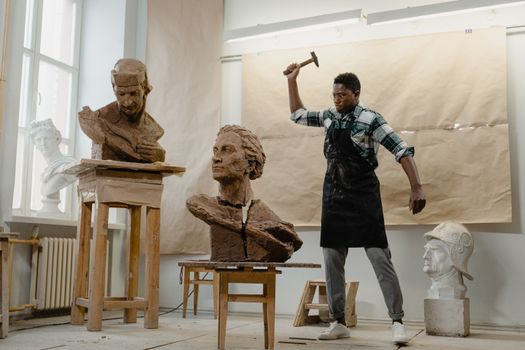
African American sculptor working with clay busts in art studio with hammer. Photo: Tima Miroshnichenko / Pexels
African sculpture is not merely decorative; it is a profound visual language, imbued with layers of meaning that speak to the heart of various cultures across the continent. Unlike Western art traditions that often prioritize aesthetic appeal for its own sake, much of traditional African sculpture is created with a specific purpose, deeply intertwined with spiritual beliefs, social structures, and historical narratives. To truly grasp the African sculpture meaning, one must look beyond the surface and delve into the intricate systems of thought, ritual, and community life from which these objects emerge. They serve as conduits to the ancestral realm, embodying spirits, commemorating leaders, facilitating rites of passage, and upholding societal norms. Each curve, every scarification mark, and the choice of material itself holds significant symbolic weight, communicating complex ideas to those who understand its visual vocabulary. These sculptures are not static objects but active participants in the lives of the communities that create and use them, often animated through rituals, song, and dance. Their power lies in their ability to connect the human world with the divine, the past with the present, and the individual with the collective. The sheer diversity across the African continent means that there is no single, monolithic 'African sculpture meaning.' Instead, there is a rich tapestry of interpretations, each unique to its originating culture, yet often sharing common threads of human experience and spiritual quest. Understanding these nuances requires respect for the cultural context and an appreciation for the holistic worldview that shapes these extraordinary artistic expressions. From the powerful ancestral figures of the Fang to the intricate masks of the Dogon, each piece tells a story, preserves history, and reinforces identity. Explore the deep connection between art and identity in African cultures.

Symbolism and Spirituality: Unlocking the Deeper African Art Symbolism
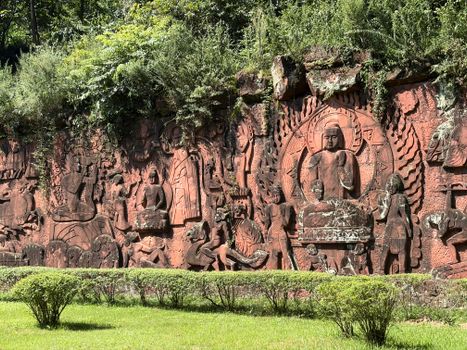
Explore the intricate ancient Buddhist rock carvings in Leshan, Sichuan, showcasing cultural heritage. Photo: Guillaume Kremer / Pexels
At the core of understanding African sculpture meaning lies its profound symbolism and spiritual significance. These objects are often seen as living entities, imbued with spiritual power, rather than inert representations. Ancestor veneration, a cornerstone of many African belief systems, frequently manifests in sculptural forms. Figures carved to represent ancestors serve as focal points for rituals, prayers, and offerings, maintaining a vital connection between the living and the dead. They are not worshipped as gods themselves, but rather as intermediaries or vessels through which communication with the spiritual realm is made possible. Similarly, deities and nature spirits are frequently personified in sculptural forms, each embodying specific attributes, powers, and responsibilities. For instance, Yoruba sculpture is rich with representations of Orisha, each figure meticulously crafted to reflect the characteristics and domain of a particular deity. The materials chosen for these sculptures also carry symbolic weight. Wood, being organic and from the earth, often signifies life, growth, and connection to nature. Specific types of wood might be chosen for their perceived spiritual properties. Metal, particularly iron, is often associated with strength, transformation, and the blacksmith's vital role in society. The addition of libations, sacrificial materials, or adornments like beads, cloth, or feathers further enhances the sculpture's power and meaning, transforming it over time into a palimpsest of ritual and history. These additions are not merely decorative but are integral to the object's spiritual efficacy and ongoing narrative. The scarification patterns, elaborate coiffures, and exaggerated anatomical features often found on figures are not arbitrary; they are coded messages, indicating status, lineage, initiation, and moral virtues. To fully appreciate the African sculpture meaning, one must be prepared to engage with these complex layers of spiritual and symbolic language, recognizing that the art is a dynamic expression of faith and cultural identity.

The Role of Form and Function in Traditional African Art
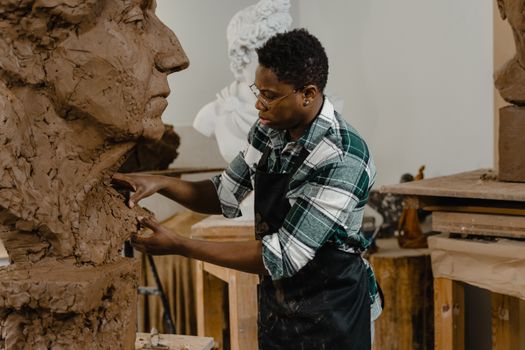
Artist sculpting a large clay bust in an art studio, showcasing creativity and craftsmanship. Photo: Tima Miroshnichenko / Pexels
The form and function of traditional African art are inextricably linked, with the aesthetic choices directly serving the object's intended purpose. Far from being art for art's sake, these sculptures are utilitarian in the broadest sense, serving vital roles in community life, governance, education, and healing. Masks, for example, are among the most dynamic forms of African sculpture. Their meaning is fully realized not in a museum case, but during performances where they are worn by dancers, accompanied by music and ritual. These masquerades can celebrate harvests, mark initiation ceremonies, mourn the deceased, or even enforce social control. The specific features of a mask – its eyes, mouth, and elaborate headdress – are carefully crafted to convey the character or spirit it embodies, influencing the audience's emotional and spiritual response. Similarly, power figures, such as the Nkisi Nkondi of the Kongo people, are created to house spirits and address various societal needs, from healing and protection to justice. Nails or blades driven into their surface often mark specific vows, disputes, or events, making the sculpture a living archive of community interactions. The very act of carving these figures is often a ritualistic process, undertaken by highly skilled artists who are themselves respected members of society, sometimes considered spiritual practitioners. They work with a deep understanding of the materials and the spiritual forces they are invoking. The choice of posture, the emphasis on certain body parts (e.g., enlarged heads signifying wisdom, prominent navels indicating lineage), and the overall composition all contribute to the communicative power of the piece. Understanding the original context and the specific function of a sculpture is paramount to deciphering its African sculpture meaning. Without this context, one risks reducing these powerful cultural artifacts to mere curiosities, missing the profound narratives and spiritual energies they encapsulate. Discover the rich history of African traditional arts.

Interpreting African Cultural Heritage Through Sculptural Narratives
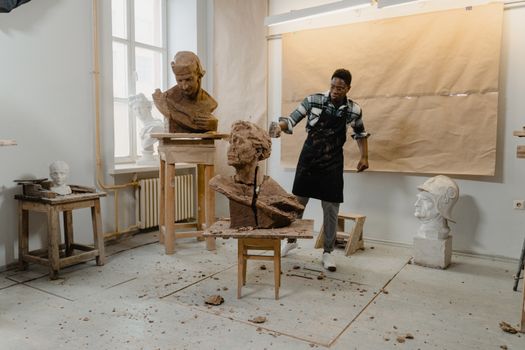
Artist in art studio sculpting clay with hammer, surrounded by sculptures. Creative workspace vibe. Photo: Tima Miroshnichenko / Pexels
Interpreting African cultural heritage through its sculptural narratives offers a window into the diverse histories, social structures, and philosophical understandings of the continent's peoples. These sculptures act as tangible archives, preserving knowledge and traditions across generations. They often depict historical events, legendary figures, or social archetypes, serving as mnemonic devices that reinforce collective memory and identity. For instance, the bronze heads and plaques of Benin, renowned for their intricate detail, commemorate kings (Obas) and court officials, providing a visual chronicle of the powerful Benin Kingdom. Each piece narrates a segment of their history, showcasing regalia, rituals, and the hierarchical structure of society. Similarly, the ancestral figures of the Dogon in Mali, often characterized by elongated forms and raised arms, embody complex cosmologies and creation myths, reflecting their unique understanding of the universe and humanity's place within it. These sculptures are not just static representations; they are active participants in the transmission of cultural values and ethical principles. They teach younger generations about their heritage, the importance of community, respect for elders, and adherence to traditional laws. The stylistic variations across different ethnic groups – from the geometric abstraction of the Kuba to the naturalistic portrayals of the Ife – also reflect distinct cultural aesthetics and worldviews. Understanding these nuances is key to appreciating the depth of African sculpture meaning. It's a reminder that African art is not a monolith but a vibrant mosaic of cultural expressions, each contributing to a rich and complex tapestry of human experience. When engaging with these works, it's crucial to approach them with an open mind, recognizing that their beauty lies not only in their form but in the profound cultural narratives they embody. To truly grasp their significance is to engage with the very soul of a people and their enduring legacy.

Comparison

AspectTraditional African SculptureWestern Fine Art (Historical)Modern African Art
Primary PurposeRitual, Spiritual, Social FunctionAesthetic, Representation, PatronageExpression, Critique, Identity
Context of CreationCommunity, Ritual, Spiritual BeliefsIndividual Artist, Patron, AcademyIndividual Artist, Global Dialogue
EmphasisSymbolism, Function, CommunityRealism, Idealism, IndividualismInnovation, Personal Narrative
InterpretationCulturally Embedded, FunctionalAesthetic Judgement, Historical ContextDiverse, Personal, Global Influences

What Readers Say

"This article beautifully articulates the profound African sculpture meaning. It shifted my perspective from simply admiring the form to understanding the deep spiritual and cultural roots. Truly insightful!"

Thabo Mokoena · Johannesburg, ZA

"As an art student, I found the breakdown of symbolism and context incredibly helpful. It's essential to grasp that African art isn't just 'pretty'; it's powerful and purposeful. This piece explains it perfectly."

Naledi Ntuli · Durban, ZA

"I always saw African sculptures as decorative, but this article opened my eyes to their true significance. Now, when I visit galleries, I look for the stories and the spiritual messages, making the experience much richer."

Kwame Adu · Cape Town, ZA

"While very comprehensive, I would have loved to see more specific examples from lesser-known ethnic groups. However, the overall explanation of African sculpture meaning is excellent and highly educational."

Zola Khumalo · Pretoria, ZA

"The distinction between art for aesthetics and art for function was a major takeaway for me. It really clarifies why African sculpture is so different and so deeply integrated into the culture."

Sipho Dlamini · Bloemfontein, ZA

Frequently Asked Questions

What is the primary African sculpture meaning?

The primary African sculpture meaning is rarely purely aesthetic; it is deeply functional and symbolic. These sculptures serve vital roles in spiritual practices, social rituals, ancestor veneration, communication with deities, and upholding community values. They are active participants in cultural life, embodying spirits, commemorating events, and transmitting knowledge.

Are all African sculptures spiritual in nature?

While a vast majority of traditional African sculptures have significant spiritual or ritualistic connotations, not all are exclusively spiritual. Some may serve as markers of status, historical records, or tools for social control. However, even these often operate within a worldview where the spiritual and material realms are closely intertwined.

How can I learn to interpret the specific meanings of different African sculptures?

To interpret specific meanings, begin by identifying the sculpture's region and ethnic group, as symbolism varies. Examine its form, materials, and any symbolic elements like patterns or features. Most importantly, research its original cultural context and function – whether it was used in rituals, ceremonies, or as a symbol of power. Consulting scholarly works and cultural experts is highly recommended.

Is African sculpture valuable, and how is its value determined?

Yes, African sculpture can be incredibly valuable, both culturally and monetarily. Its value is determined by factors such as its age, rarity, provenance (history of ownership), condition, artistic quality, and the significance of the culture or artist who created it. Authenticity and ethical acquisition are also paramount considerations in its market value.

How does African sculpture compare to European classical sculpture?

African sculpture often differs significantly from European classical sculpture. While classical European sculpture frequently emphasizes naturalistic representation, idealism, and individual artistic expression for aesthetic appreciation, African sculpture often prioritizes symbolism, abstraction, and functionality within a communal, spiritual context. The purpose and worldview behind their creation are fundamentally distinct.

Who should be interested in understanding African sculpture meaning?

Anyone interested in art history, anthropology, cultural studies, spirituality, or simply a deeper understanding of human expression should be interested. Collectors, curators, students, and educators will find immense value in exploring the rich, complex narratives embedded within these profound artistic forms. It offers a unique lens into diverse human experiences.

Are there ethical concerns when collecting or displaying African sculpture?

Yes, there are significant ethical concerns. It's crucial to ensure that any acquisition is legal and ethical, avoiding pieces that were looted or illegally exported. Respecting the cultural origins, understanding the sacred nature of some objects, and supporting contemporary African artists are vital considerations for responsible engagement with this art form.

What are the future trends in the study and appreciation of African sculpture?

Future trends include increased focus on repatriation efforts for looted artifacts, a deeper emphasis on indigenous interpretations and voices, and the integration of digital technologies for preservation and broader accessibility. There's also a growing appreciation for the influence of traditional African aesthetics on modern and contemporary art globally, broadening its academic and public appeal.

Embark on a journey of discovery and uncover the profound African sculpture meaning. Deepen your appreciation for these timeless works of art and the rich cultures they represent, connecting you to a heritage of unparalleled spiritual and artistic depth.

Topics: African sculpture meaningAfrican art symbolismtraditional African artAfrican spiritual artAfrican cultural heritage
Leo List

IE Escorts NO Escorts US Escorts NZ Escorts AU Escorts
Brampton weed
Adultwork EstrelaBet Vai de Bet R7 Bet Betão Galera Bet Rainbet Bet9ja Shop SportyBet BetKing Sisal Loto Foot Hollywoodbets YesPlay Odibets RushBet Jugabet BetWarrior BetCity MSport betPawa Fortebet